|
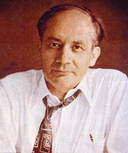
The term Genocide was coined by Raphael Lemkin, a Polish criminal and international law specialist of Jewish descent, in 1944. A survivor of the Jewish Holocaust, Lemkin sought to describe Nazi policy of systematic murder, violence as well atrocities committed against the Armenians in the Ottoman Empire in 1915.
The word genocide was created by combining the Greek word ‘geno,’ for race or tribe and the Latin word ‘cide,’ for killing. In 1945, when the International Military Tribunal at Nuremberg condemned Nazi officials for crimes against humanity, the word “genocide” was included in the verdict, but as a descriptive, and not a legal term.
On December 9, 1948 the United Nations adopted the Convention on the Prevention and Punishment of the Crime of Genocide, that defines genocide as an international crime. The signatory states are obliged to prevent and punish the perpetrators.
According to the Convention, a genocide is one of the following acts aiming to completely or partially exterminate a national, ethnic, racial or religious group:
1. Murder of the members of a group;
2. Serious bodily or mental harm to the members of a group;
3. Deliberate creation of such living conditions for a group that brings about its complete or partial physical extermination.
4. Implementation of measures aimed at preventing birth rates within the group;
5. Forcible transfer of children from one group to another.
After the adoption of the convention some scholars have suggested other, more comprehensive definitions.
In 1959 legist Peter Drost defined Genocide as “the intentional deprivation of life of people belonging to a particular group”.
Renowned genocide expert, the editor of “Encyclopedia of Genocide” Israel Charny proposed the following definition. “Genocide, in a general sense, is the mass killing of a considerable number of people, which was not carried out in military operations against the armed forces of the enemy, but in the conditions of insecurity and helplessness of the victims.”
The UN convention does not define the murder of the members of a political group as a genocide, but many genocide experts insist on the inclusion of that point in the definition. Prominent genocide expert and sociologist Leo Cooper notes that in the contemporary world, political disagreements are at least as significant a basis for massacre and annihilation as racial, national, ethnic or religious differences. In addition to the omission of the murder of a political group from the definition of genocide in the Convention, scientists Ted Gurr and Barbara Harff have coined the new term ‘politicide’.
Politicide or political murder is term that defines the deliberate and mass extermination of the national, political, social, military, scientific and cultural figures of the victims of the genocide that was carried out by the executioner of the genocide. The aim is to deprive of the force, that is able to organize the self-defense of the ethnic group before or during the realization of the genocide.
|