A SHORT BIBLIOGRAPHY OF THE PUBLICATIONS BY THE ARMENIAN GENOCIDE
MUSEUM-INSTITUTE OF NATIONAL ACADEMY OF SCIENCES
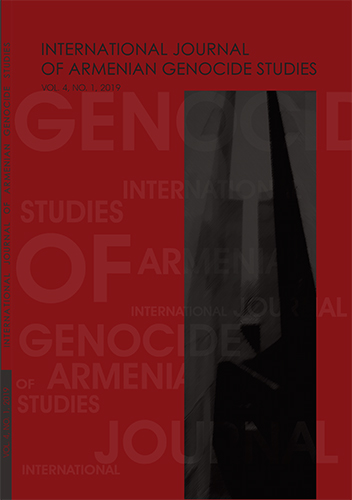 |
“International Journal of Armenian Genocide Studies”, Armenian Genocide Museum-Institute, 4:1, Yerevan, 2019, 111 pages, in English.
“International Journal of Armenian Genocide Studies” publishes articles and reviews on the Armenian Genocide and Genocide Studies in general. Priority is given to articles in the fields of history, political science, anthropology, sociology, literature and law. Articles related to other sciences are also included in the journal if they are of major relevance to the topic.
|
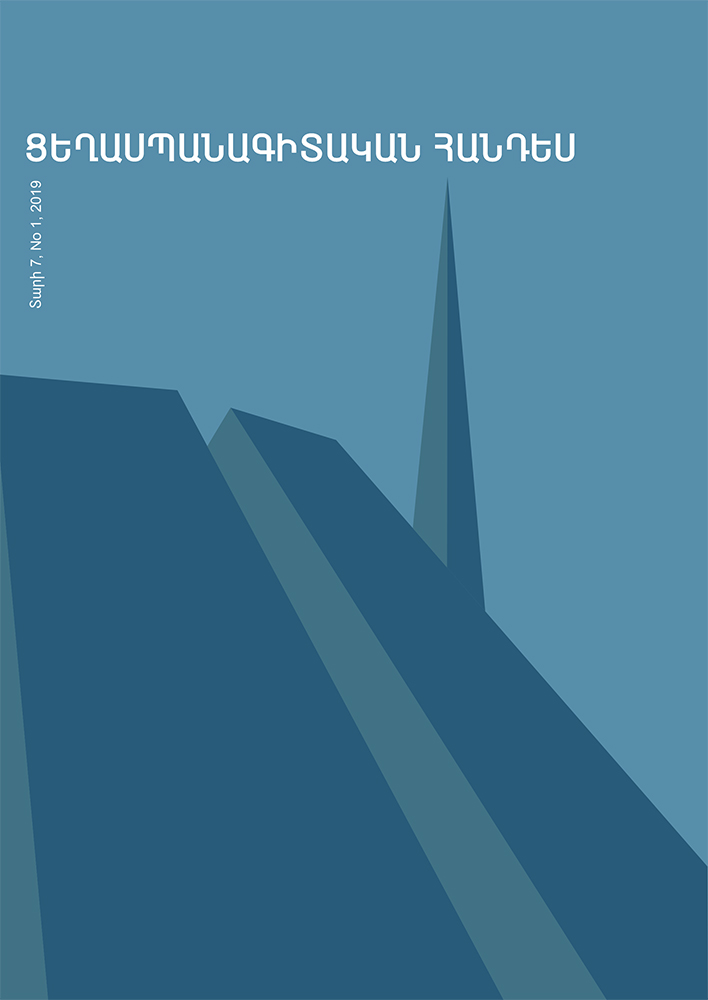 |
“Journal of Genocide Studies”, Armenian Genocide Museum-Institute, Yerevan, 2019, 151 pages, presented in Armenian.
The first issue of the seventh volume of the scientific journal. This issue of the journal includes articles on the history, sociology, psychology, law of the Genocide.
|
 |
“Journal of Genocide Studies”, Armenian Genocide Museum-Institute, Yerevan, 2018, 314 pages, presented in Armenian.
The second issue of the sixth volume of the scientific journal. This volume contains articles on Genocide history, statistics, eyewitness memories, sociology, and psychology.
|
|
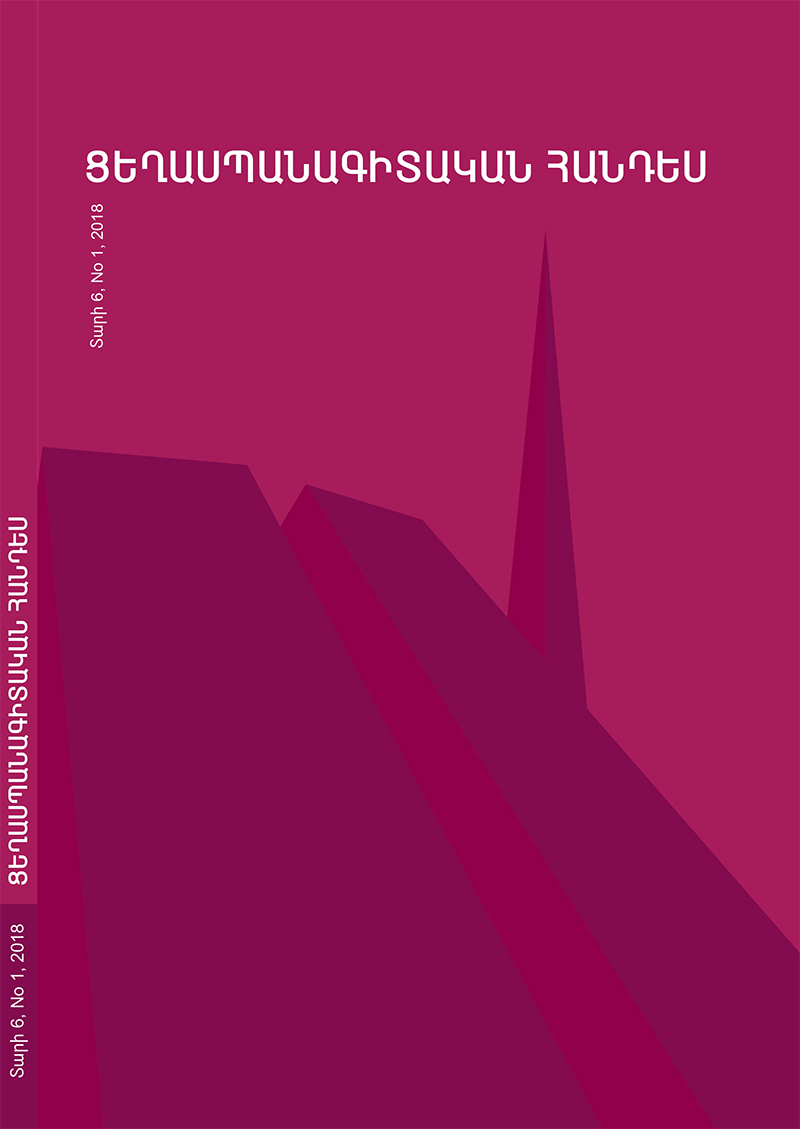
“Journal of Genocide Studies”, Armenian Genocide Museum-Institute, Yerevan, 2018, 154 pages, presented in Armenian.
The first issue of the sixth volume of the scientific journal. This volume contains articles on Genocide history, sociology, psychology, law, museology and linguistics.
|
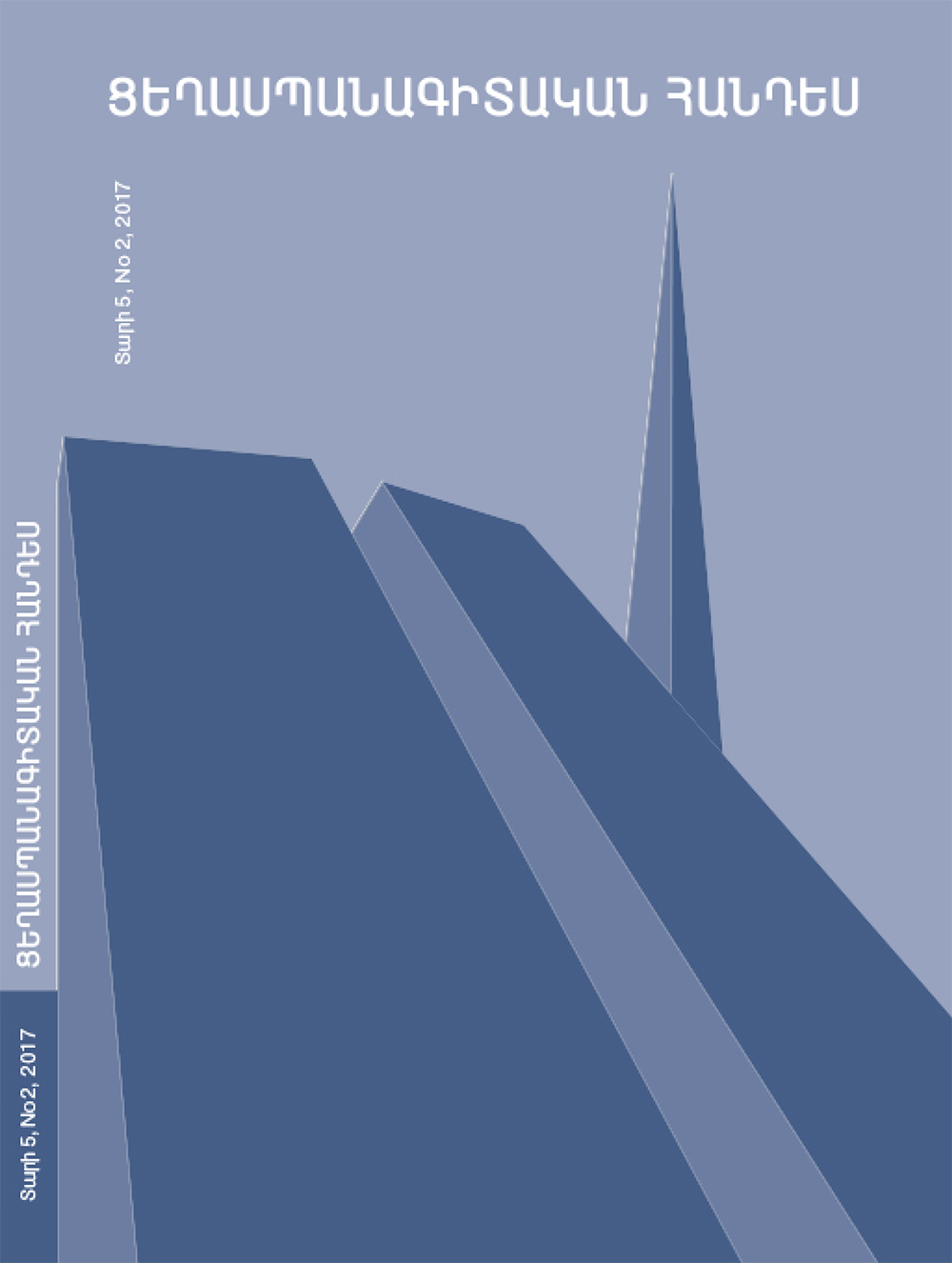 |
“Journal of Genocide Studies”, RA NAS Armenian Genocide Museum-Institute, Yerevan, 2017, 114 pages, presented in Armenian.
The second issue of the fifth volume of the scientific journal. This volume contains articles on Genocide history, sociology, psychology, law, museology and linguistics.
|
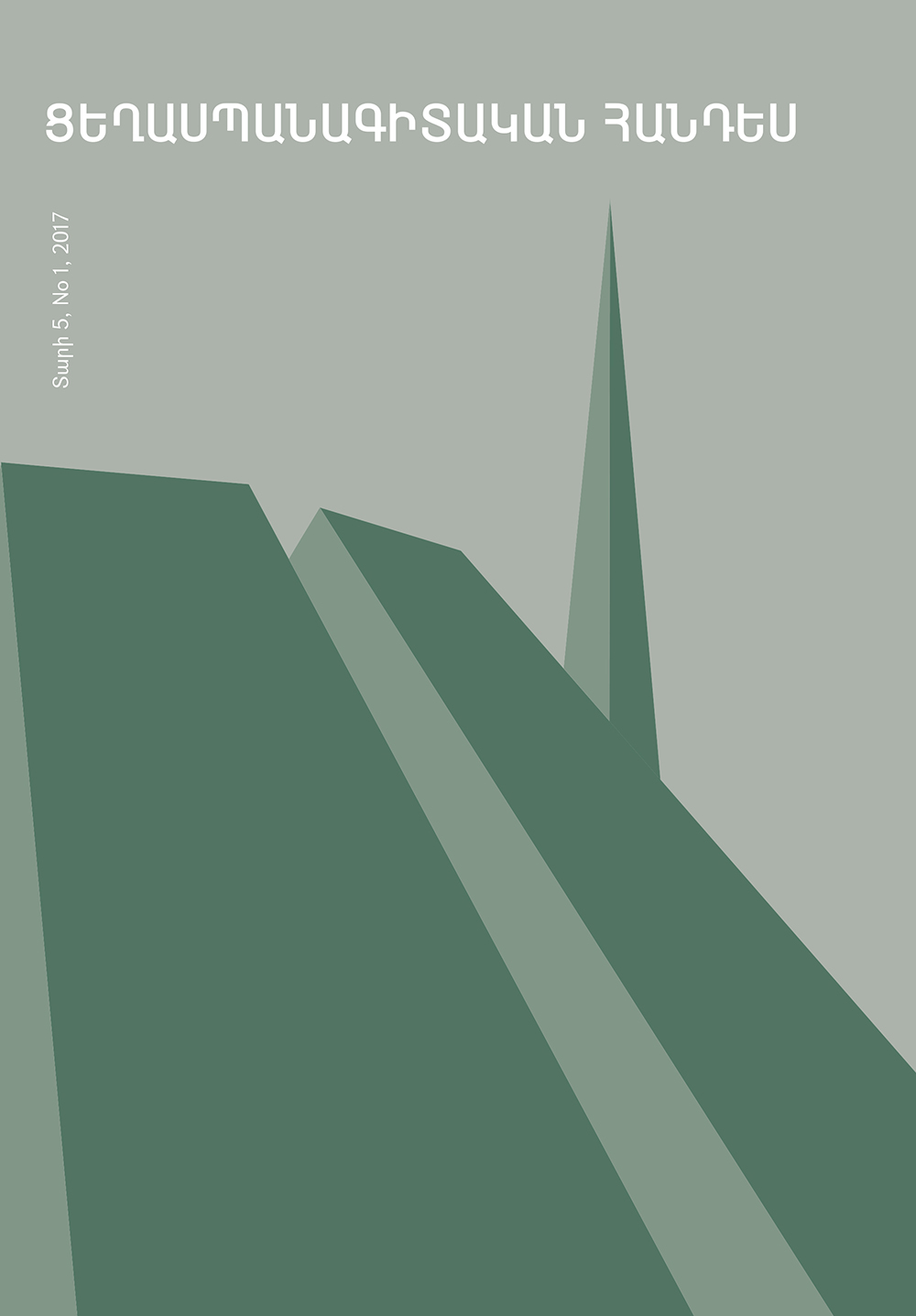 |
“Journal of Genocide Studies”, RA NAS Armenian Genocide Museum-Institute, Yerevan, 2017, 188 pages, presented in Armenian.
The first issue of the fifth volume of the scientific journal. This volume contains articles on Genocide history, sociology, psychology, law, museology and linguistics.
|
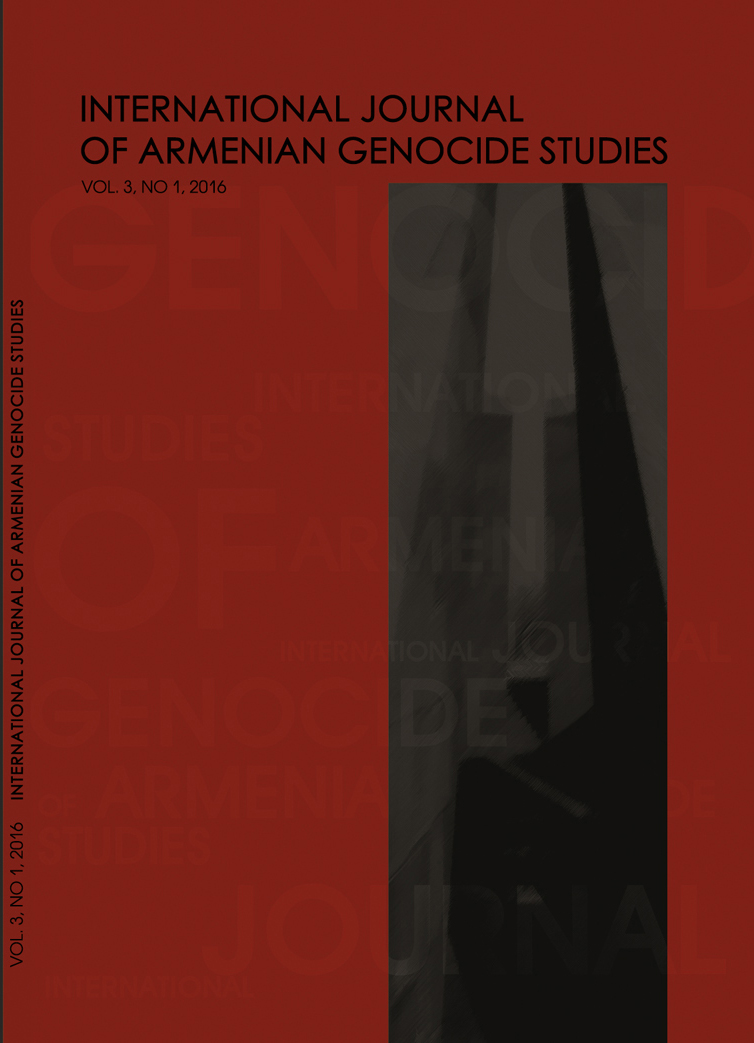 |
“International Journal of Armenian Genocide Studies”, Yerevan, Armenian Genocide Museum - Institute, 2016, 115 pages. English edition.
International Journal of Armenian Genocide Studies publishes articles and reviews related to Armenian Genocide as well as genocide studies in general. Particular attention is paid to articles dealing with history, political science, anthropology, sociology, literature and law. Articles on other sciences are also be considered if they have strong ties or contexts with the main theme.
The journal has been published twice a year since 2014, Editor-in-Chief: Hayk Demoyan.
|
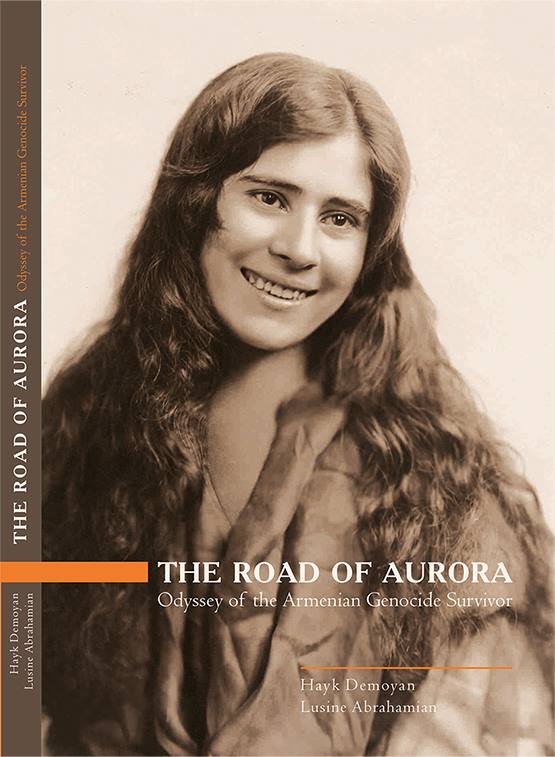 |
Hayk Demoyan, Lusine Abrahamyan, “The Road of Aurora, Odyssey of Armenian Genocide Survivor”, Yerevan, RA NA Armenian Genocide Museum-Institute, 2015, 156 pages. English edition.
The illustrated edition presents the odyssey of Aurora Martiganian; survivor of Armenian Genocide. Her memories were published in American press back in 1918, under the title “Auction of Souls” or “Ravished Armenia”. In the same year the silent movie “Auction of Souls” which was based on the book and created for charitable purposes was also screened. Most of the topics found in this book are presented for the first time.
|
 |
“The Armenian Genocide in Literature, The Second Generation Responds”, Yerevan, RA NA Armenian Genocide Museum-Institute, 2015, 392 pages. English edition.
The English monograph “The Armenian Genocide in Literature, The Second Generation Responds” is the fourth book by Rubina Piroomian on the Armenian Genocide. The author has examined the transmission of the genocide impact to the second generation of the Genocide survivors. Just like the case of the previous works the author noticed the fiction literature becomes the reflection of the genocide impact on the life, present and the future of the second generation of genocide survivors.
|
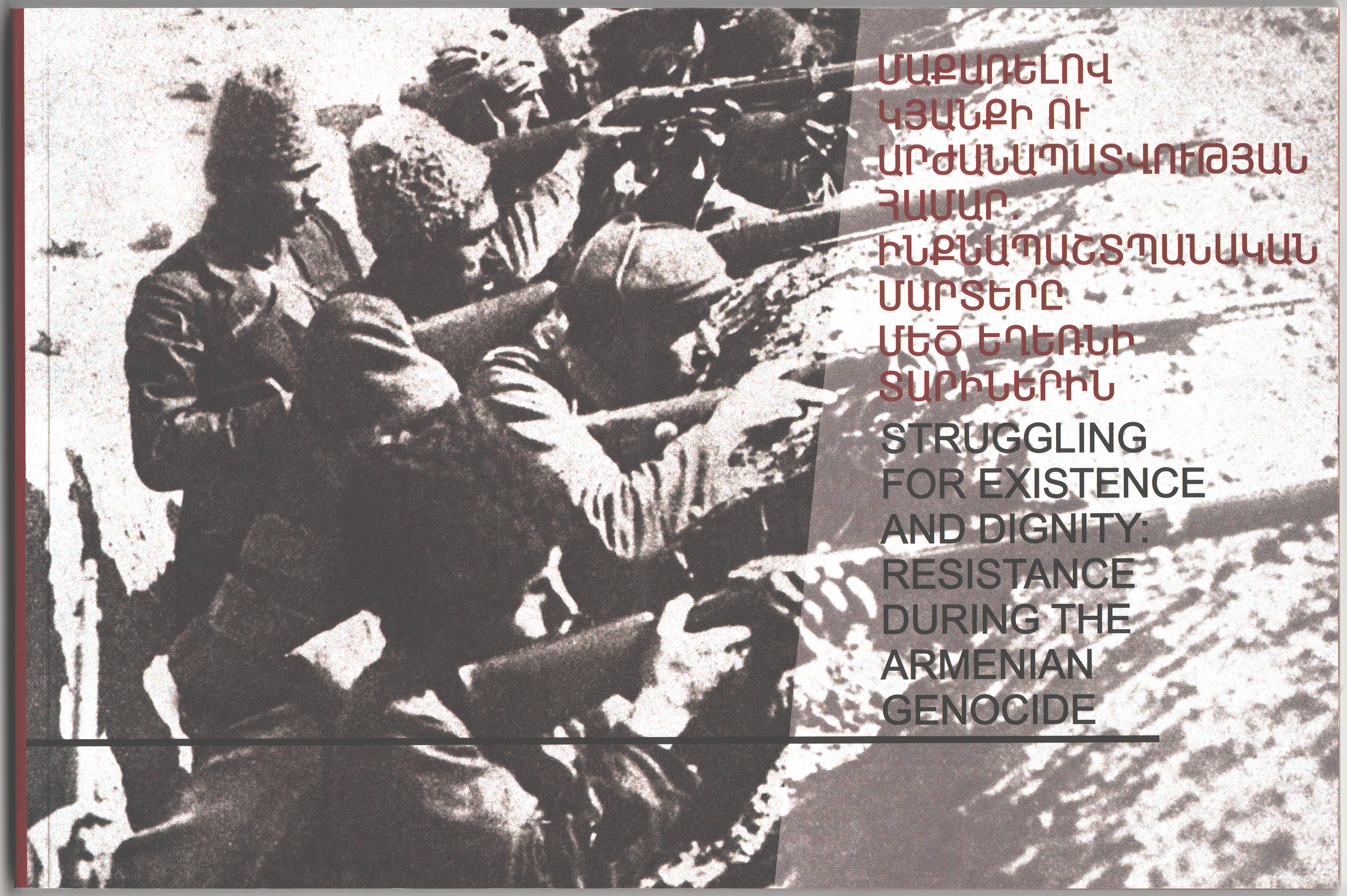 |
“Struggling for Existence and Dignity: Resistance during the Armenian Genocide”, exhibition catalogue, Yerevan, Armenian Genocide Museum Institute, 2015, 130 pages. Armenian and English editions.
This edition presents the catalogue of temporary exhibition “Struggling for Existence and Dignity: Resistance during the Armenian Genocide” prepared by Armenian Gemocide Museum-Institute.
This publication is intended for historians and wide circle of readers.
|
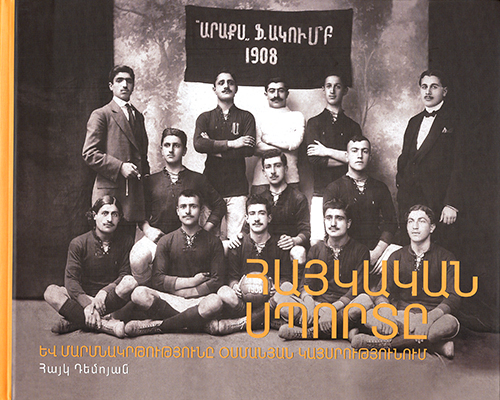 |
Hayk Demoyan, “Armenian Sports and Gymnastics in the Ottoman Empire”, Yerevan, Armenian Genocide Museum Institute, 2015, 274 pages. Armenian and English editions.
This publication is the updated and revised version of the same volume published in 2009. The prehistory of the Armenian sport and gymnastic in the Ottoman Empire, the development of the sport and gymnastics in Western Armenia and the activities of sport clubs are combined and presented in this book for the first time. Throughout this photo enriched volume, the reader is introduced with not yet known but very interesting episodes of the Armenian sport.
The book in intended for wild range of readers.
|
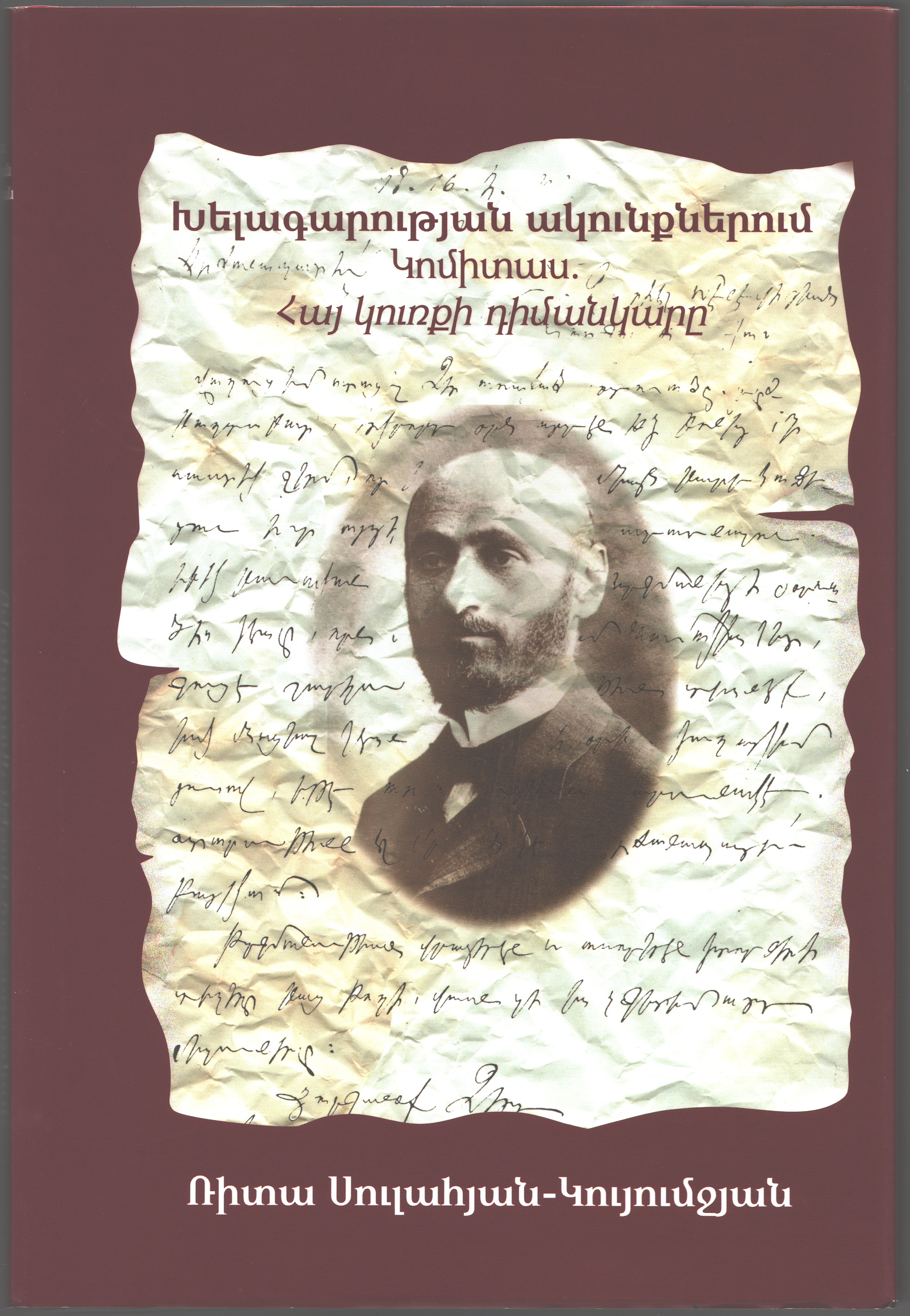 |
Rita Syulahian-Kuyumjian, “Archeology of madness: Komitas, portrait of an armenian icon” , RA NAS, Armenian Genocide Museum-Institute, Yerevan, 2015, 272 p. Presented in Armenian.
The book is dedicated to the studies of still unknown pages and the folds of psychological experiences of the great Armenian composer, musician and armenologist Komitas Vardapet. Based on psychology, using modern psychiatric-psychoanalytic approaches and methods, the author has tried to reveal Komitas’s psychological characteristics, emotions and their sources, to provide professional conclusions and substantiates.
|
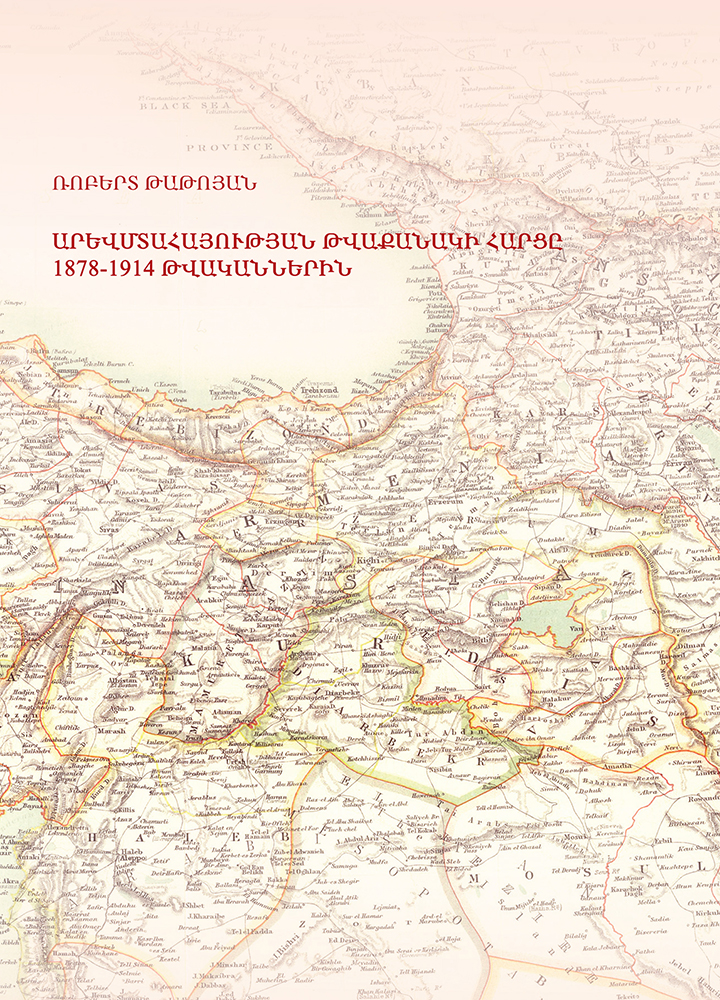 |
Robert Tatoyan, “The Number of Western Armenians in 1878-1914” , RA NAS, Armenian Genocide Museum-Institute, Yerevan, 2015, 216 p. Presented in Armenian.
The work is dedicated to the revisiting history of Armenian population number in Western Armenian provinces during 1978-1914.
Statistical data of the Ottoman government and Armenian Patriarchate of Constantinople about the Armenian population number in Western Armenia during 1878-1914 are presented and analyzed in this work. Separate reference is made to the discussions of the Armenian population number issue in diplomatic process in 1878-1914.
|
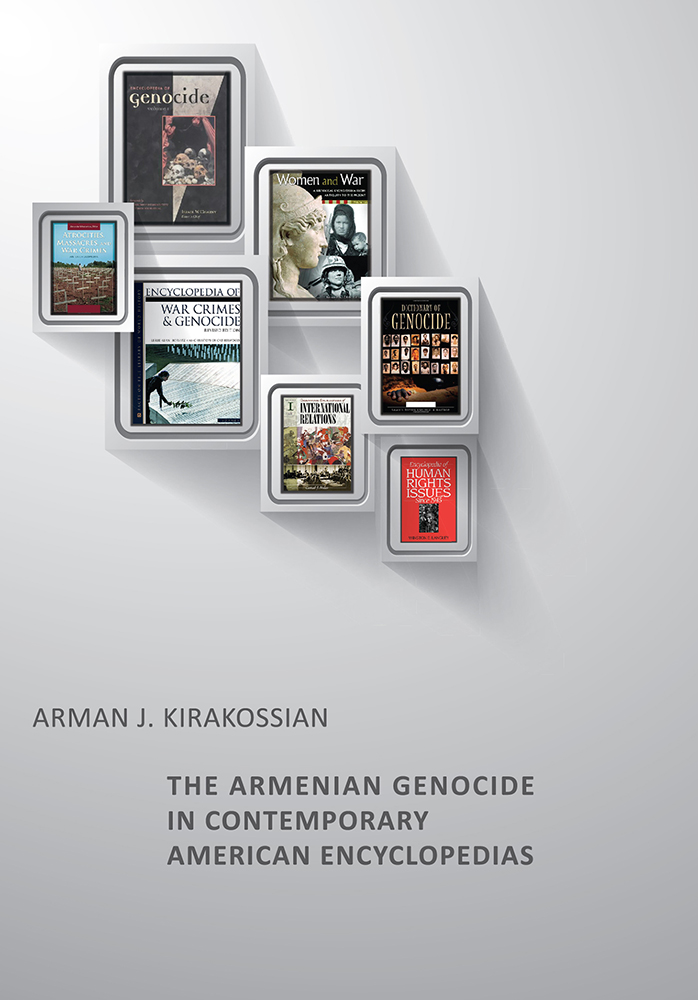 |
Arman J. Kirakossian, “The Armenian Genocide in Contemporary American Encyclopedias”, RA NAS, Armenian Genocide Museum-Institute, Yerevan, 2015, 175 p. Presented in English.
In this publication Dr. Arman Kirakossian studied and analyzed nearly forty specialized and thematic encyclopedias (Encyclopedia of War Crimes and Genocide, Encyclopedia of Genocide, etc.), dictionaries (Dictionary of Genocide, etc.), handbooks (The Oxford Handbook of Genocide Studies, etc.) and other directories published in the USA during the last fifteen years. Based on the material gathered the author divided the book into chapters which are representing conceptual and factual aspects of the Armenian Genocide beginning from the origins of the Armenian Question. The book consists of 16 chapters, list of encyclopedias, a bibliography of a literature related to the Armenian Genocide found in different encyclopedias.
|
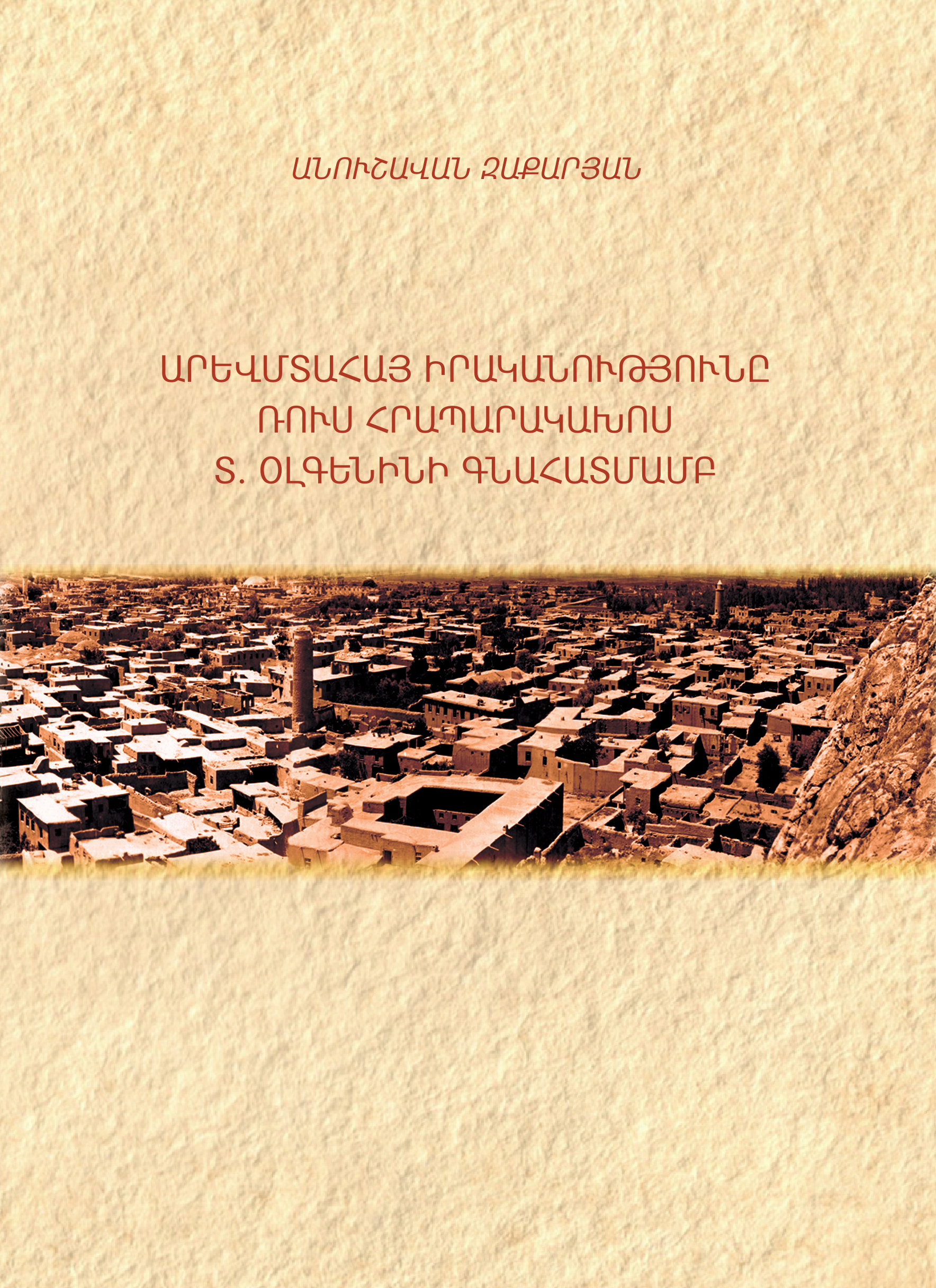 |
Zakaryan Anushavan, “The Reality of Western Armenia Estimated by Russian Publicist, Fr. Olgenin”, RA NAS Armenian Genocide Museum-Institute, Yerevan, 2015, 112 pages. Presented in Armenian.
For the first time in this collection the correspondences and lectures made by Antoine Berezovsky – Olgenin (pen name; T. Olgenin) famous Russian publicist of the XX century, reporter of “Novoe vremja” (New time) newspaper in Petersburg and then reporter of “Birjevie vedomosti” (Stock Exchange News) newspaper. In his reports he tells about his visit to Western Armenian in late January to mid of May, 1913, and gives details about the social, economic and political situation of Western Armenians living under the Kurdish-Turkish yoke. The book also includes the lectures delivered by Olgenin in Tbilisi and Baku titled “Vanishing Armenia”.
The book is intended for a wide range of readers.
|
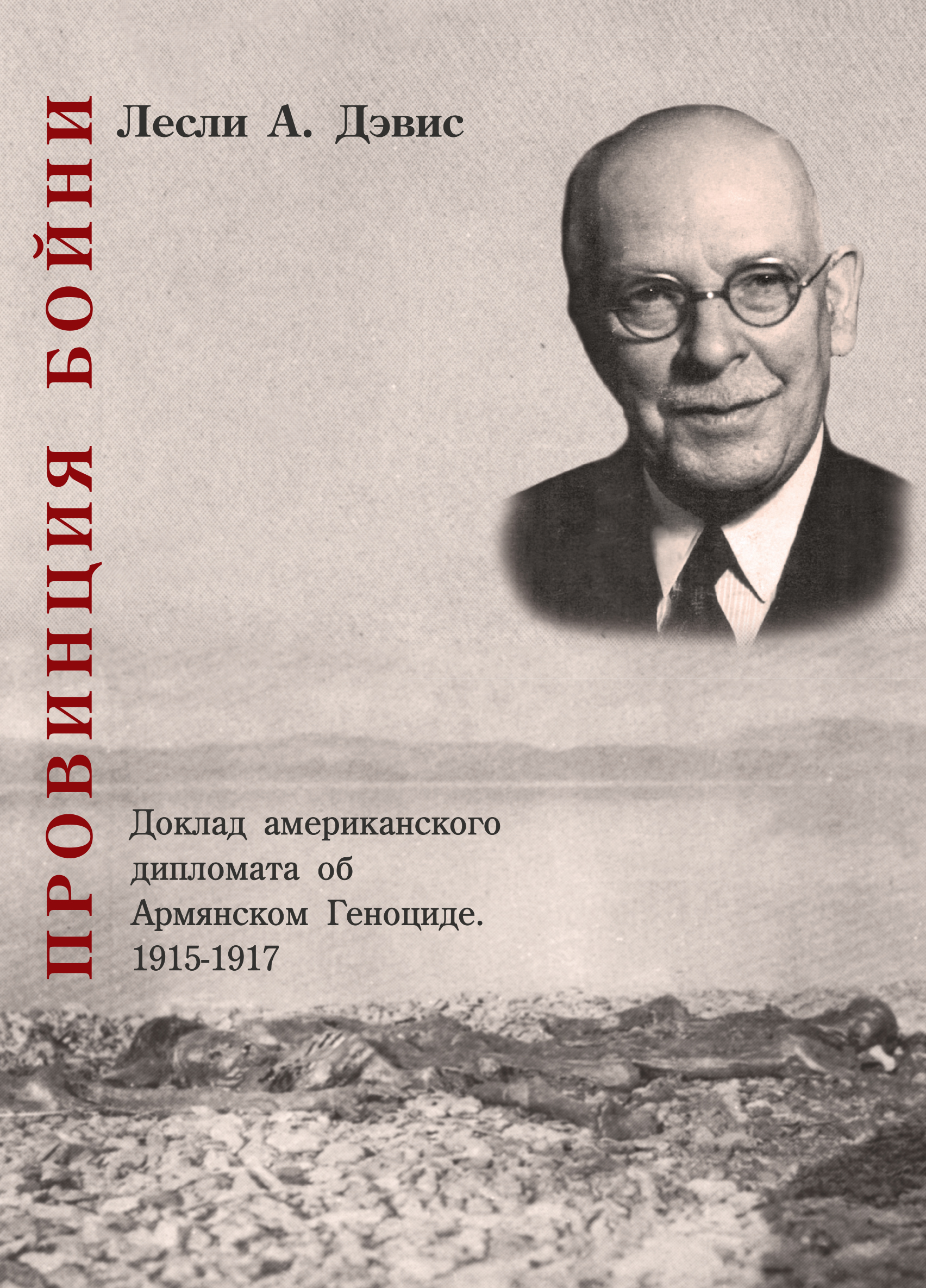 |
Leslie Davis, “The Slaughterhouse Province”, the report of the American diplomat (1915-1917). The publication, introduction and notes are by Suzan K. Bleri, RA NAS Armenian Genocide Museum-Institute, Yerevan, 2015, 304 pages. Presented in Armenian.
This documentary book is first published in 1989, in New York. Leslie Davis, who was a US Consul in Western Armenia, witnessed the Armenian Genocide carried out by the Ottoman government. In his report, which is this book, American diplomat presents everything that happened in front of his eyes.
|
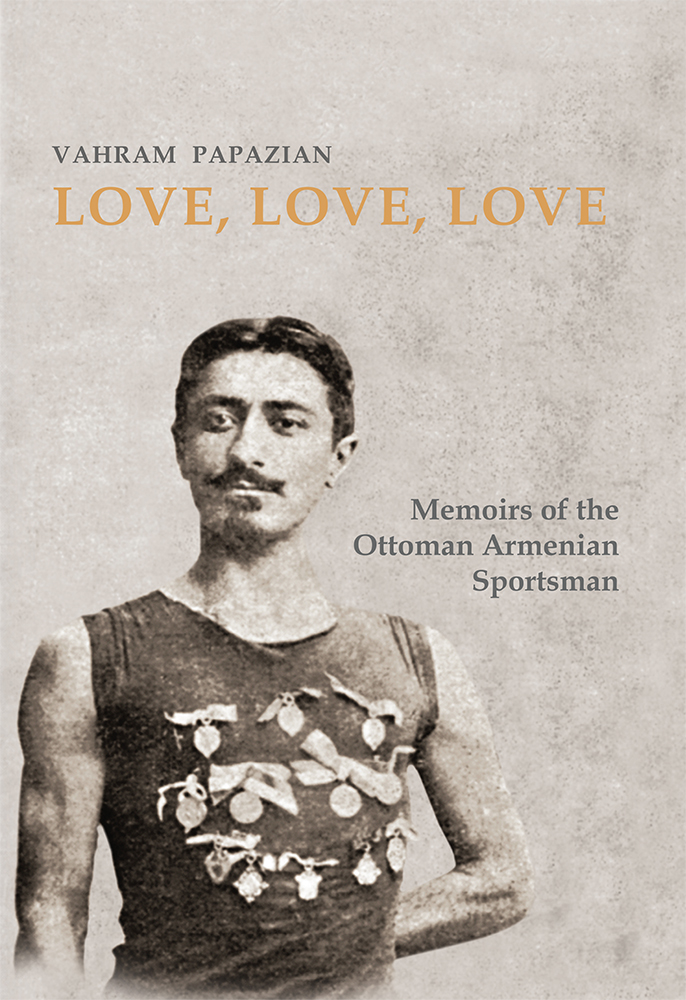 |
Vahram Papazian, “Love, Love, Love”, RA NAS the Armenian Genocide Museum-Institute, Yerevan, 2015, 240 pages.
The memoirs titled “Love, love, love” are a very unique source of pre-genocidal Armenian life in the Ottoman Empire. It’s also an absolute historical source about sports and Olympic Games, World War I, Armenian Genocide, as well as refugees and migration.
For the first time in the Ottoman history two Armenian sportsmen Vahram Papazian and Mkrtich Mkrian represented the Ottoman Turkey in the fifth Olympic Games in Stockholm, 1912.
|
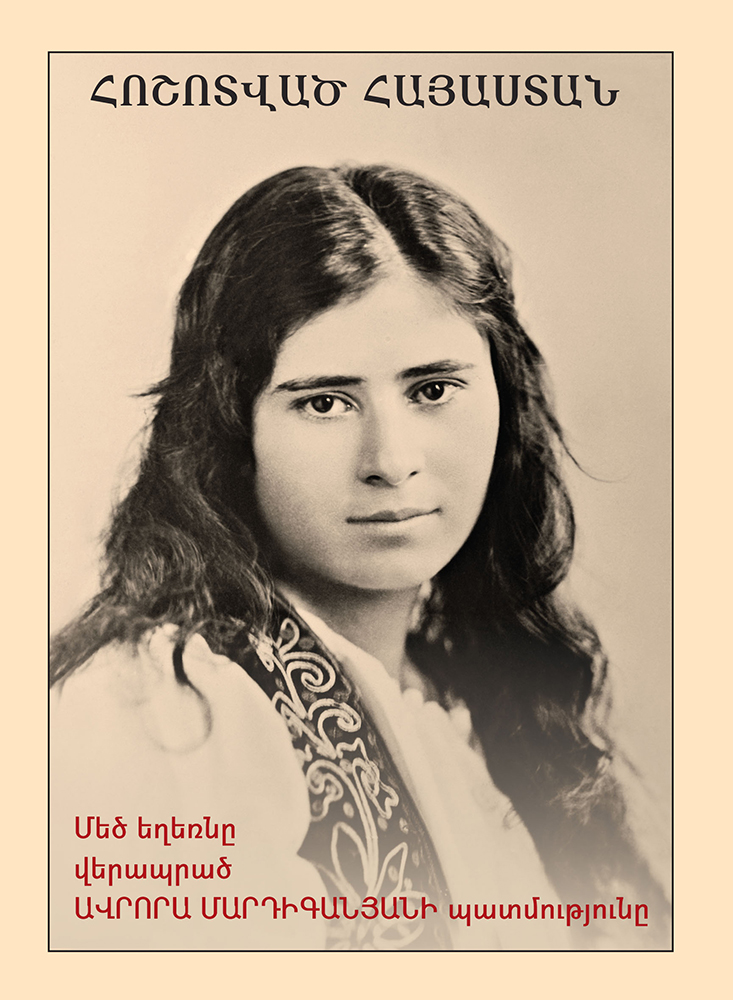 |
“Ravished Armenia”, RA NAS the Armenian Genocide Museum-Institute, Yerevan, 2015, 208 pages, Armenian translation.
The book presents a young Armenian girl Aurora Mardiganian's ( Arshaluys Martikian ) recollection on the excruciating sufferings and inhuman tortures she and her expelled nation have passed during the Armenian Genocide.
The book is designed for a wide range of readers, as well as for those studying the history of cinema.
|
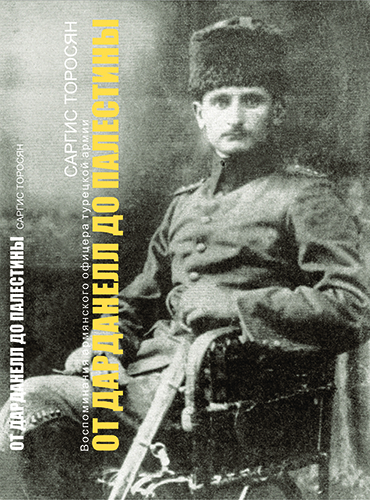 |
Sarkis Torosian, “From Dardanelles to Palestine”, Armenian Genocide Museum-Institute, Yerevan, 2014, 176 p. (in Russian)
The story of Sarkis Torosian is not just memories, but unique monument and living testimony of the Armenian Genocide. Being a participant in Dardanelle battle; one of the bloodiest sessions of the war, Sarkis Torosian was awarded by the Ottoman Government.
|
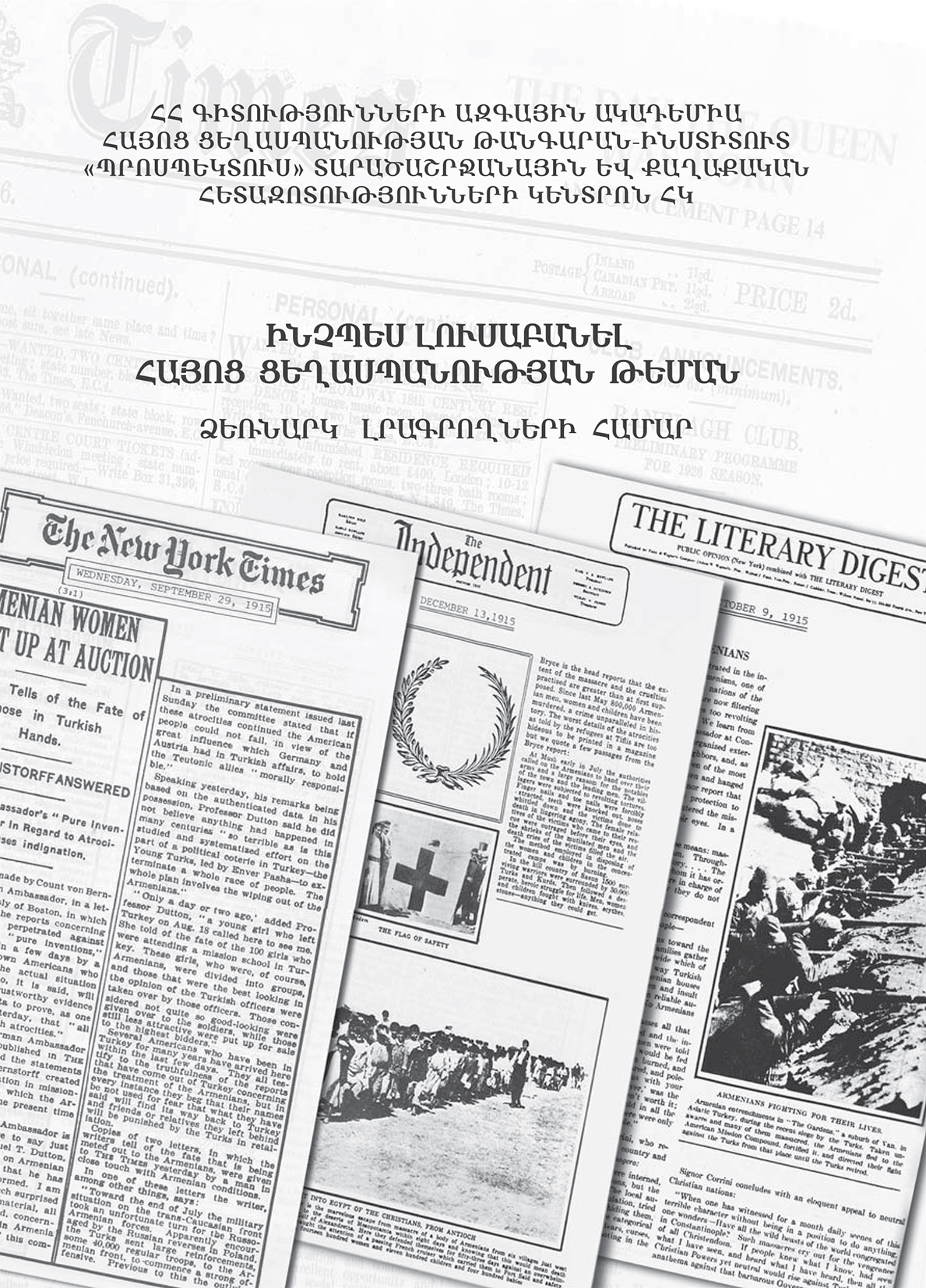 |
“How to Cover the Topic of the Armenian Genocide”, Armenian Genocide Museum-Institute, Yerevan, 2014, 136 p. (in Armenian)
Manual for journalists. The issue includes articles about how to cover the topic of the Armenian Genocide in a literate manner, as well as guidelines and details about how to present the topic to the public.
|
 |
"Journal of Genocide Studies", Armenian Genocide Museum-Institute, Yerevan 2014, 160 p. (in Armenian).
Scientific periodical, second issue. The second issue of this journal presents articles related to the history, sociology, psychology, law and linguistics as well as museum knowledge.
|
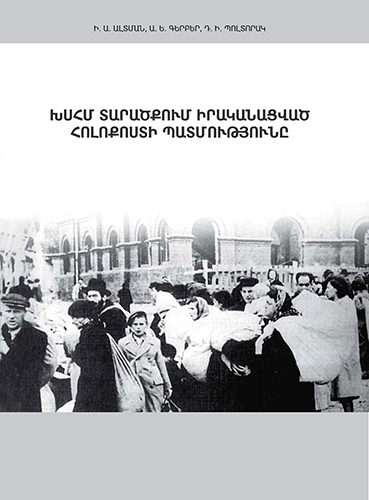 |
I. A. Altman, A. Y. Gerber, D. I. Poltorak, "The History of Holocaust in Soviet Union", Armenian Genocide Museum-Institute, Yerevan, 2014, 80 p. (in Armenian).
Study Manual about Holocaust in the territory of the USSR.
|
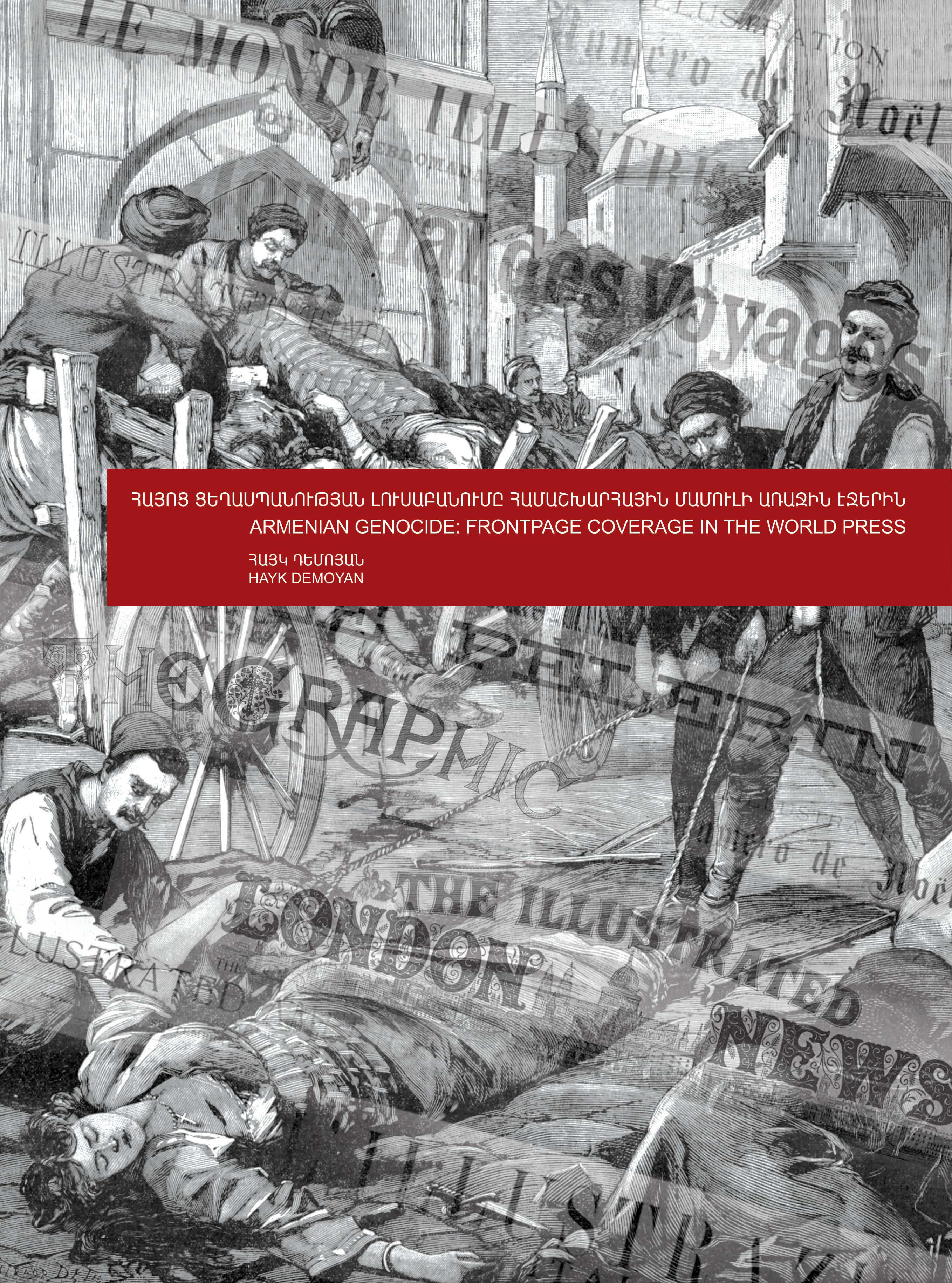 |
Hayk Demoyan, “Armenian Genocide: Front page coverage in the world”, The Armenian Genocide Museum–Institute, Yerevan, 2014, 266 p. (in Armenian and in English).
The illustrated volume includes unique materials from the world press of 19-20th centuries. The collection realistically portrays the Turkish crimes against civilization and humanity, which have constantly been in the limelight of the world’s press attention. Numerous materials can be found from English, French, American, Italian, Russian, Austrian, Czech, German, Norwegian press sources.
|
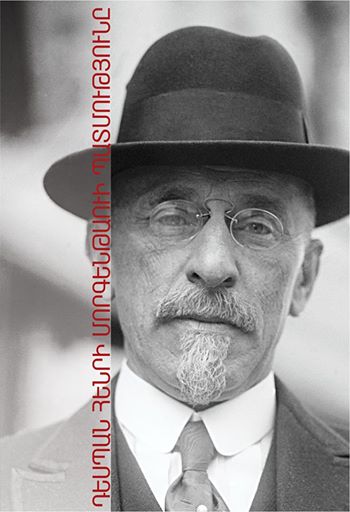 |
“The Story of Henry Morgenthau”, Armenian Genocide Museum-Institute, Yerevan, 2012, 310 p., (in Armenian)
The story of Ambassador Henry Morgenthau, which is presented in accuracy of an eyewitness and an analyst, is an important primary source against the denying policy of Turkish modern historiography.
|
 |
Narine Margaryan, “The Status of the Armenian Deportees Settled In Syria as a Result of the Armenian Genocide and the Armenian - Arab Relations (1915-1924)”, Armenian Genocide Museum-Institute, Yerevan, 2013, 180 p., (in Armenian)
The author of the book sheds light on the problems of the Armenians settled in Syria after the Armenian Genocide. It researches the attitude of the Syrian Arabs to the Armenians.
|
 |
Arsen Avagyan, “The Armenian Genocide. The Mechanisms of Decision-making and Implementation”, Armenian Genocide Museum-Institute, Yerevan, 2013, 133 p., (in Russian)
The book reveals the mechanisms of decision-making and their implementation during World War I and the years after war, based on archives and primary sources.
|
 |
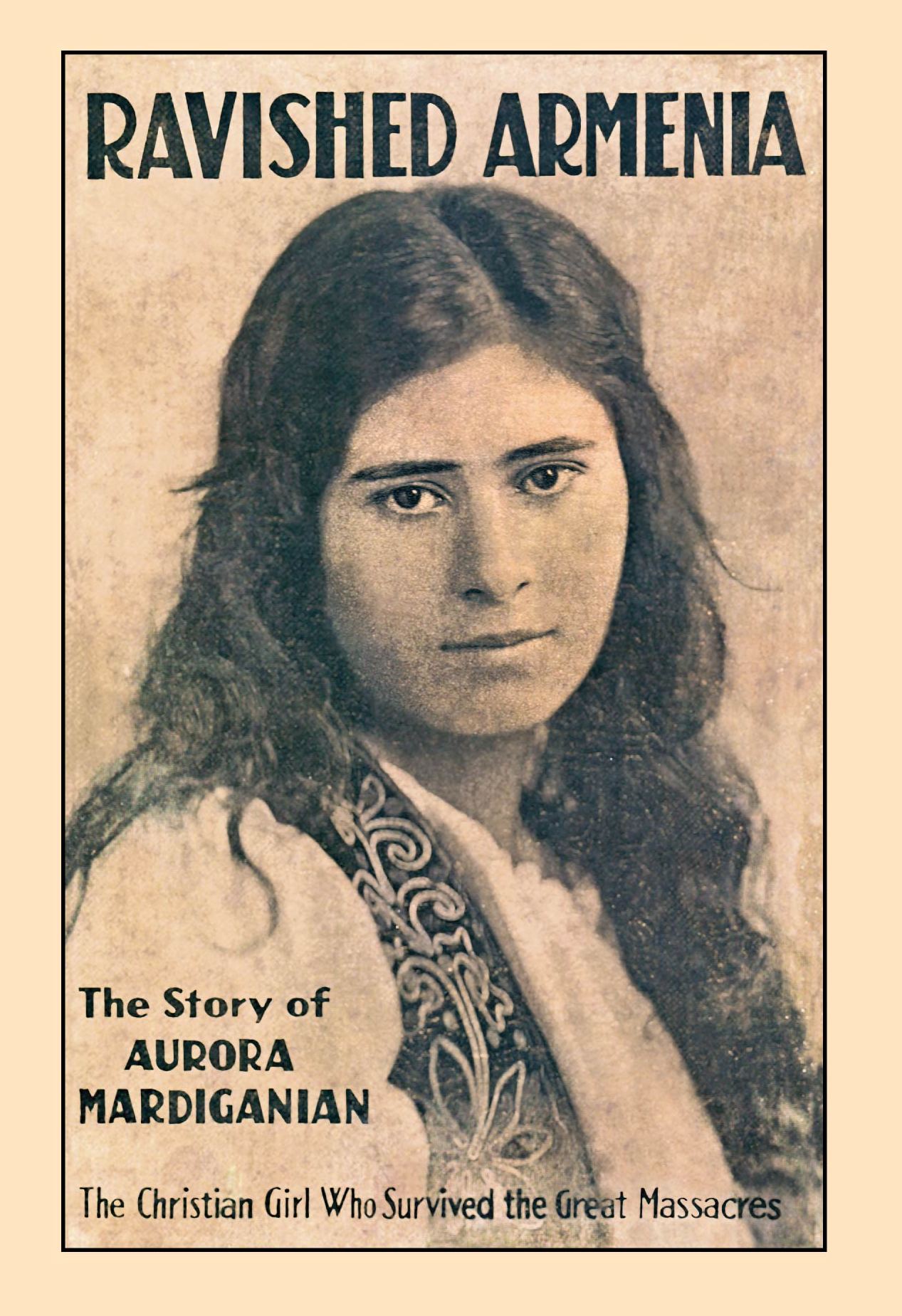
«Ravished Armenia», The Armenian Genocide Museum–Institute of NAS RA, Yerevan, 2013, 153 p. (in Russian).
The “Ravished Armenia” book is the memories of the Armenian Genocide survivor Aurora Mardiganian, from Chmushgazak, the personal tragedy of a young girl as a victim of Turkish genocidal policy.
|
 |
«Ravished Armenia», The Armenian Genocide Museum–Institute of NAS RA, Yerevan, 2013, 148 p. (in English).
The “Ravished Armenia” book is the memories of the Armenian Genocide survivor Aurora Mardiganian, from Chmushgazak, the personal tragedy of a young girl as a victim of Turkish genocidal policy.
Book was published with support of Ameriagroup.
|
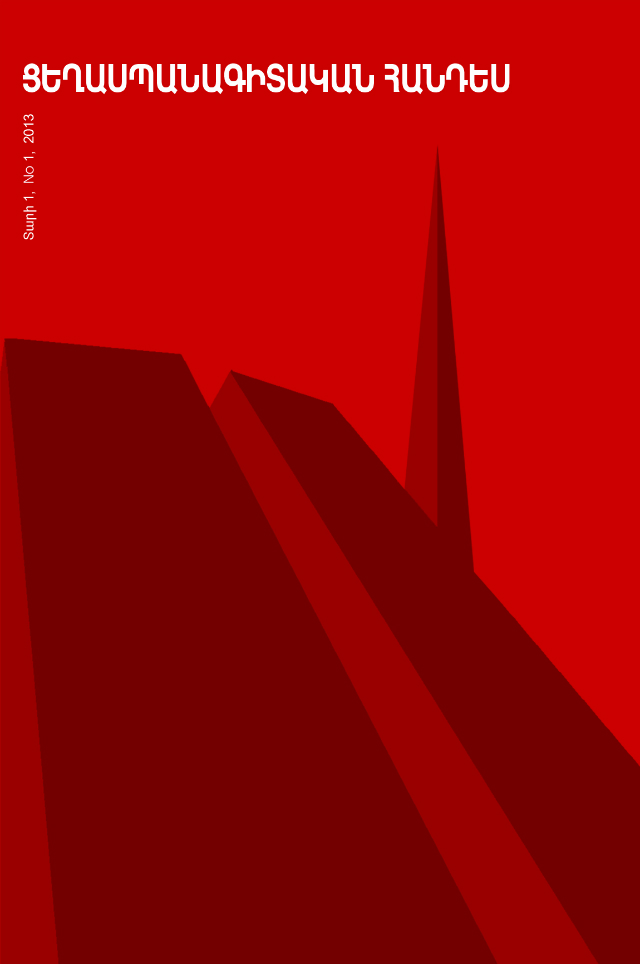 |
“Journal of Genocide Studies”, The Armenian Genocide Museum–Institute of NAS RA, Yerevan, 2013, 176 p. Scientific periodical, the first issue ( in Armenian).
The first volume contains the materials of the International Conference which was held in Yerevan at April, 2009, and was dedicated to the centennial anniversary of the Adana massacres 1909.
|
 |
Sargis Torosian, “From Dardanelles to Palestine”, The Armenian Genocide Museum–Institute of NAS RA, Yerevan, 2013, 208 p., (in Armenian).
Memoirs of Sargis Torosian represent the odyssey of an Armenian officer in Ottoman army during WWI. The main character didn't suffer the Genocide; however he became a victim of the Armenian Genocide, one of the biggest crimes of the 20th century, organized by the Ottoman government. Memoirs of Sargis Torosian have recently been also translated in Turkish published in Turkey.
|
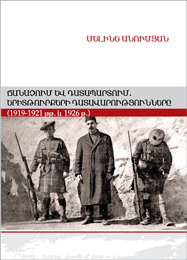 |
Meline Anumyan “Recognition and Condemnation: Young Turks Trials (1919-1921 and 1926). The Armenian Genocide Museum–Institute of NAS RA, Yerevan, 2013, 168 p. (in Armenian).
The work is dedicated to the study of the lawsuits issued over the massacres and deportations of the Armenians in Military Tribunals of the Ottoman Empire during 1919-1921 and the trials of the Young Turks held in the Independent courts of the Turkish Republic in 1926.
|
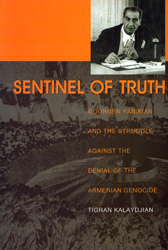 |
Tigran Kalaydjian, “Sentinel of Truth: Gourgen Yanikian and the struggle against the denial of the Armenian Genocide”, The Armenian Genocide Museum–Institute of NAS RA, Yerevan, 2013, 118 p. (in English).
«Sentinel of Truth» provides a detailed account of the assassination of two Turkish diplomats in California in 1973 by an aggrieved septuagenarian survivor of the Armenian Genocide, and explains how a study of the global campaign against Turkey’s denial of the genocide cannot but include the killings carried out by Gourgen Yanikian.
|
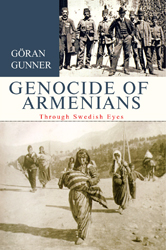 |
Göran Gunner, “Genocide of Armenians Through the Swedish Eyes”, The Armenian Genocide Museum–Institute of NAS RA, Yerevan, 2013, 370 p. ( in English).
The book consists of an introduction and 9 chapters. In separate chapters Gunner represents the Hamidian massacres, the Armenian Genocide, planned and implemented by the regime of Young Turks, and the massacres of the Armenians carried out by Kemalists in 1919-1922. The author depicts the Armenian Genocide as the first genocide of the 20th century.
The volume was first published in Swedish in Sweden, in 2012.
|
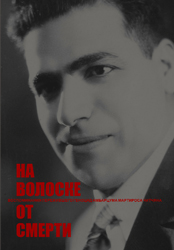 |
Hampartzoum Chitjian “A Hair’s Breadth from Death” , The Armenian Genocide Museum–Institute of NAS RA, Yerevan, 2012, 383 p. ( in Russian).
These unique memoirs of an Armenian Genocide survivor present the odyssey, the suffering and the struggle of Hampartzoum Chitijian who lived in Berri Village, Kharberd.
Hampartzoum Chitjian’s memoirs contain valuable evidence of the massacres of the Armenian population in Kharberd Province. There is also important information about the daily life, rituals and traditions of Western Armenians in the book.
The Western Armenian and English versions of the memoirs were published in Taderon Press in 2004. The translation and publication of the Russian edition of the book has been sponsored by “Hampartzoum Chitjian” fundation.
|
 |
Gevorg Vardanyan, “The Greek Population in the Ottoman Empire and the Asia Minor Disaster (1914 - 1923)”, Yerevan: Armenian Genocide Museum-Institute, 2012, 196 p.
This monograph represents the situation of the Greek population in the Ottoman Empire and the Greek Genocide from 1914 to 1923. The parallels between the causes and the mechanisms for the accomplishment of two cases of Genocides (Armenian and Greek) are carried out in this book.
|
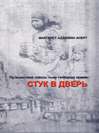 |
Margarit Ajemyan-Ahnert, “The knock at the door”, Armenian Genocide Museum-Institute of National Academy of Science of RA, Yerevan, 2012, 212p., (in Russian).
The book contains the memories of the author's mother Ester Minerjyan, who was born in Amasia in 1900, (Sebastia province, Western Armenia). She represents the 1915 disaster and its endless consequences. The book was published in English in 2007, in USA and brought “Humanitarian Award” to the author. In 2008, the writer of the book was also the winner of the New York Book Fair in the nomination of “The best historical memoirs”.
The memoirs of the witness of the Armenian genocide was translated in Armenian and published in Yerevan by the support of the Fund for Armenian Relief.
|
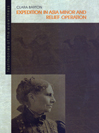 |
Clara Barton, “Expedition in Asia Minor and Relief Operation”, Armenian Genocide Museum-Institute of National Academy of Science of RA, Yerevan, 2012, 194p., (in English)
This book presents the report about the relief expedition, organized by Clara Barton, the founder and president of American Red Cross and one of the most eminent figures of American history. The aim of this expedition was to help the Armenian population that became the victim of Hamidian massacres of 1895-1896. The volume contains rather valuable information about the activity of four parties that were involved in the humanitarian expedition, headed by Clara Barton. It provides a detailed descriptions about the difficulties overcome during the organization of relief work, which was aimed at helping the Armenians, who had survived from massacres.
|
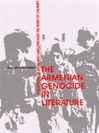 |
Rubina Peroomian, “The Armenian Genocide in Literature. Perceptions of Those Who Lived Through the Years of Calamity”, Armenian Genocide Museum-Institute of National Academy of Science of RA, Yerevan, 2012, 465p., (in English).
This book is another contribution to the struggle for the condemnation of the genocide. The subject of the book is the reflection of the Genocide theme in fiction.
The epilogue of the work says: “The book depicts the psychological condition of the Armenians, who passed through the hell made by the Turks, with the wounds caused by the horrible scenes they witnessed and the unspeakable torture they survived, as an irreparable imprint on their and their generations’ souls.”
|
 |
Jakob Küntzler, “In the Country of Blood and Tears”, Armenian Genocide Museum-Institute of National Academy of Science of RA (in Armenian), Yerevan, 2011, 152p.
The Armenian Genocide Museum-Institute presents a book titled “In the Country of Blood and Tears” by Swiss missionary Jakob Küntzler in Armenian translation, which has a primary source value and describes the events of Urfa during World War I. The fact that the author of the book was an eyewitness to the events makes the memoirs more valuable for the student of the Armenian Genocide implementation details.
The book is designed primarily to meet the needs of historians, researchers in Oriental Studies, as well as for wide circle of readers.
|
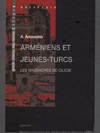 |
A. Adosides “Armenians and Young Turks. The Massacres in Cilicia” translated into Armenian, Museum-Institute of Armenian Genocide of National Academy of Science Edition, Yerevan, 2011.
The book was first published in Paris in 1910. In his work the author guided by the testimonies of American, English and French diplomats and missionaries. Adosides in detail discusses the massacres of the Armenians that took place in Cilicia and Aleppo and analyses their reasons.
The murder of several hundred Greeks and Assyrians during the extermination of the Cilician Armenians the author considers as coincidences pointing out that the orders of massacres in Adana and adjacent regions concerned merely the Armenians.
|
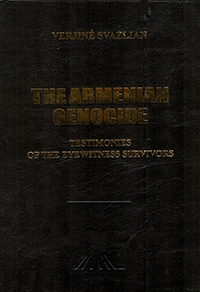 |
Verjine Svazlian, “The Armenian Genocide: Testimonies of the eyewitness survivors”, Armenian Genocide Museum-Institute of National Academy of Science of RA, Yerevan, 2011, 848p., (in English).
The present work includes the primary – source popular oral testimonies of historical nature, the memories, the narratives, the Armenian and Turkish language songs written down, audio- and video- recorded by the author from the eye-witness survivors of the Armenian Genocide.
|
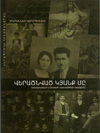 |
Hovhannes Karapetyan (Onnik Yusuf) “A Life Reborn. Through Imaginary and Real Horrors”, Museum-Institute of Armenian Genocide of National Academy of Science Edition, Yerevan, 2010.
This book presents life story of Hovhannes Karapetyan from childhood till old age who miraculously saved from the Armenian Genocide and then sheltered in Armenia. The author has presented the life of the Armenians living in Adabazar, the 1915 deportations, the mental images of the massacres, the fears and the horrors which he has endured himself. The life and the progress of the first decades of the Soviet Armenia, then the beginning of the Great Patriotic War, his participation in that war till its victorious end are described in the other chapters of the book.
|
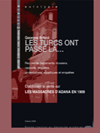 |
Armenian Genocide Museum-Institute of NAS RA reprinted the rare monograph of Georges Brezol “Turks Have Passed Here”. The book is a valuable source on the Armenian massacres in Adana in April, 1909. It contains unique documents, testimonies and photographs concerning Adana massacres of 1909.
The book for the first time was published in Paris, 1911. The monograph is the second edition of the “Cilician Series of Book” sponsored by Ralph Yirikian, executive Director of VivaCell-MTS.
|
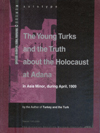 |
Ferriman Ducket, Turkish Atrocities, The Young Turks and the Truth about the Holocaust at Adana, in Asia Minor, during April, 1909, Museum-Institute of Armenian Genocide of National Academy of Science Edition, Yerevan, 2009, 156 p., (in Eng.)
The monograph by Ferriman Ducket, which was first published in 1913 in London, presents the Armenian massacres organized and realized by the Turkish authorities in Adana in 1909. This book is a valubale source of information on Cilician massacres, revealing important and unknown details of the horrible events in Adana and Cilician region.
|
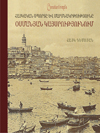 |
Hayk Demoyan, Armenian Sport and Gymnastics in the Ottoman Empire, Museum-Institute of Armenian Genocide of National Academy of Science Edition, Yerevan, 2009, 220 p., (in Arm.)
The monograph published in 2009 for the first time represents the formation of Armenian sport and gymnastics in the Ottoman Empire, and the process of their development. It also deals with the activities of the first Armenian gymnastic clubs. This publication gives the readers a chance to get acquainted with the parts of the history of the Armenian sports that have been unrevealed so far.
|
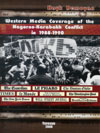 |
Hayk Demoyan, Western Media Coverage of the Nagorno-Karabkh Conflict in 1988- 1990, Museum-Institute of Armenian Genocide of National Academy of Science Edition, Yerevan, 2008, 166 p.
The monograph, by Hayk Demoyan, treats the coverage of the Nagorno-Karabakh conflict (1988 to 1990) in the western and soviet press. This book reveals differences between the commands of the western and soviet reporters and their basic reasons underlying them, and also includes the existing stereotypes. There is also a brief review of the history of the Nagorno-Karabakh conflict.
|
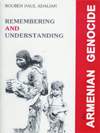 |
Rouben Paul Adalian, Remembering and Understanding the Armenian Genocide, Museum-Institute of Armenian Genocide of National Academy of Science Edition, Yerevan, 2008, 43 p.
The book by Rouben Paul Adalian briefly represents the history of the Armenian Cause and the Armenian genocide, the mechanisms of the perpetration of the Armenian genocide and its consequences, as well as the echoes of the World community. There is also reference to the theoretical questions, especially to the International Low relating to the Genocides. This book intended for general reader.
|
 |
Aramayis Baloyan, The Documents of the Historical and diplomatical archives of the Italian Ministry of the Foreign Affairs about the Armenian cause (1913-1923), Volume one, Museum-Institute of Armenian Genocide of National Academy of Science Edition, Yerevan, 2008, 250 p.
The Italian diplomatic archive documents, collected and translated by Aramayis Baloyan, were published in separate collection. These documents cast a new light on the history of the Armenian Cause and Armenian genocide, which enables us to go deeper into the study of these questions. The archive documents are published in Armenian.
|
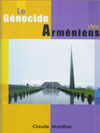 |
Claude Mutafian, Le Génocide des Arméniens, Museum-Institute of Armenian Genocide of National Academy of Science Edition, Yerevan, 2008, 32 p.
The Armenian Cause and the history of the Armenian genocide with their important points are briefly represented in the book by Claude Mutafian, published in 2008. A special emphasis is laid on the carnage organized under Sultan Hamid, the massacres of Adana in 1909 and the Armenian genocide (1915 to 1922) with their results. All this enables the reader to form an idea of the issues above mentioned at first hand.
|
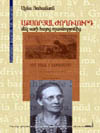 |
Alma Johanson, A People in exile. One year from the Armenian’s History, Museum-Institute of Armenian Genocide of National Academy of Science Edition, Yerevan, 2008, 148 p.
The trilingual memoirs of the Swedish missionary Alma Johanson (Armenian, Russian, English) published in 2008, are of great importance to study the history of the Armenian genocide. As a foreign witness Johanson objectively presents the 1915 events in Mush, where she worked between 1901 and 1915. The memoirs by Johanson are published in Armenian and Russian for the first time.
|
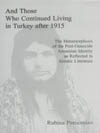 |
Rubina Peroomian, “And Those Who Continued Living in Turkey after 1915”, Museum-Institute of Armenian Genocide of National Academy of Science Edition, Yerevan, 2008, 277 p., (in Eng.)
The book, by R. Peroomian, a lecturer at the University of California, deals with questions connected with post-Genocide Armenian identity that are reflected in the works of Turkish authors. The stories of the Turks who are Armenians in their ancestry are especially interesting. This book intended for the historians, ethnographers, and Orientalists, anthropologists and those interested in the issues of identity.
|
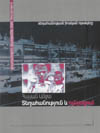 |
Hasan Amdja, “This is all right" Who killed hundreds of thousands of Armenians?”(Deportation and extermination), Museum-Institute of Armenian Genocide of National Academy of Science Edition, Yerevan, 2007, 48 p.,
(in Arm.)
The memoirs, by the Turkish political figure Hasan Amja, represent the details of the deportations of the Armenians during World War I and their future fate. H. Amdja was appointed as an “Inspector of the Armenian Deportees” by Jemal pasha during the war and he personally dealt with habitation of the deported Armenians from Syria and Lebanon and was well informed about the details of this process. That’s why the memoirs by Hasan Amdja are of great value as a source and too interesting from the stand point of the study the history of the Armenian genocide.
|
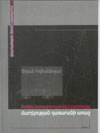 |
Tigran Hovhannisian, The Ottoman Empire and Ittihat before the Court of Humanity, Museum-Institute of Armenian Genocide of National Academy of Science Edition, Yerevan, 2007, 63 p., (in Arm.)
The book by Tigran Hovhannisian, Armenian literary, public and political figure of the early 20th century was the first work published against the Turkish falsifiers denying the Armenian genocide. This book is of great historic and scientific value and even today it can also be useful for researchers.
|
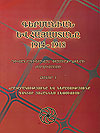 |
Germany and Armenia, 1914-1918, Collection of Diplomatic Materials, Vol. 1, translated from German, Valentina Minalyan, Hayastan Edition., Yerevan, 2006, 392 p.
Dr. Johannes Lepsius’ “Germany and Armenia” collection of documentary materials comprises reports of German ambassadors, consuls, diplomatic, military and other representatives in the Ottoman Empire, which clearly expose the essence of the anti-Armenian policies of the Turkish government.
|
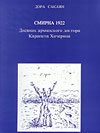 |
Dora Sakayan, Smyrna 1922. Diary of the Armenian Doctor Garabed Khacherian, Museum-Institute of Armenian Genocide of National Academy of Science Edition, Yerevan 2005, 160 p., (in Rus.)
The volume represents the diary of Karapet Khacheryan, an Armenian physician, who in September 1922 was in Smyrna and witnessed the forced emigration and massacre of the city's Christian population.
|
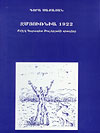 |
Dora Sakayan, Smyrna 1922. Diary of the Armenian Doctor Garabed Khacherian, Yerevan: Museum-Institute of Armenian Genocide of National Academy of Science, Nahapet Edition, 2005, 224 p., (in Arm.)
The volume represents the diary of Karapet Khacheryan, an Armenian physician who in September 1922 was in Smyrna and witnessed the forced emigration and massacre of the city's Christian population.
|
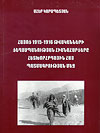 |
Mher Karapetyan, The Problematic of the Armenian Genocide of 1915-1916 in the Armenian Post-Soviet Historiography, Nahapet Edition, Yerevan, 2005, 279 p., (in Arm.)
In this volume are represented systematized and historically and critically analyzed publications on the Armenian Genocide of 1915-1916, such as collections of documents, memoirs, scientific studies, historiographic and bibliographic researches, translations of foreign authors’ writings on the topic, as well as researches on the international recognition and denunciation Armenian Genocide and other relevant literature.
|
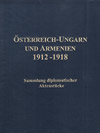 |
Austria-Hungary and Armenia, 1912-1918, Collection of Archival Documents, compiled and introduced by Artem Ohandjanian, Yerevan: Museum-Institute of Armenian Genocide of National Academy of Science Edition, 2005, 521 p., (in Germ.)
The collection of documents comprises records of the Austro-Hungarian diplomatic representatives in the Ottoman Empire on the Armenian Genocide of 1915-1918.
|
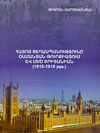 |
Tigran Sarukhanyan, Great Britain and the Armenian Genocide in Ottoman Turkey, 1915-1918, Museum-Institute of Armenian Genocide of National Academy of Science Edition, Yerevan, 2005, 202 p., (in Arm.)
The monograph focuses on the issues of the official position of Great Britain during the years of the Armenian Genocide and the British parliamentary hearings on the Armenian Genocide.
|
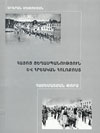 |
Tigran Matosyan, Armenian Genocide and Jewish Holocaust, An Endeavor to Compare, Museum-Institute of Armenian Genocide of National Academy of Science, Yerevan, 2005, 182 p., (in Arm.)
The monograph briefly overviews the causes, mechanisms and course of both the Armenian Genocide and the Jewish Holocaust. The author draws analytical parallels between the two cases of genocide.
|
 |
Armenian Genocide: World States Recognize and Denounce the Armenian Genocide (Collection of materials), compiled and edited by L.Barseghyan, Museum-Institute of Armenian Genocide of National Academy of Science Edition, Yerevan, 2005, 652 p., (in Arm.)
The collection of materials comprises Russian, British and Ottoman parliamentary hearings on the Armenian Genocide in 1915-1918, as well as statements and bills adopted by national and regional parliaments of various countries recognizing and condemning the Armenian Genocide.
|
 |
The Armenian Losses during the First World War, (Collection of documents and materials of the Investigation Committee on the Armenian Losses of the World War), collected, introduced and annotated by Anushavan Zakaryan, Museum-Institute of Armenian Genocide of National Academy of Science Edition, Yerevan, 2005, 239 p., (in Arm.)
The present collection allows us to form an objective idea and evaluate the activities of the Investigation Committee on the Armenian Losses of the World War, which operated in Tiflis, Georgia, from the end of 1918 till early 1920. The committee worked towards establishing losses of the Armenians during the First World War and finding the possible ways of reparations for them.
|
 |
Aram Ananyan, A New Attempt at Negating the Armenian Genocide: On the Turkish Historical Society new Publication “Armenians. Exile and Deportation”. Yerevan: Museum-Institute of Armenian Genocide of National Academy of Science Edition, 2005, 92 p., (in Arm.)
The book is refers to the recent volume published by the Turkish Historical Society «Armenians, Exile and Deportation». It discloses one of the facets of the Turkish policy of negationism; that is the anti-scientific approach of diminishing the number of the Ottoman Armenians.
|
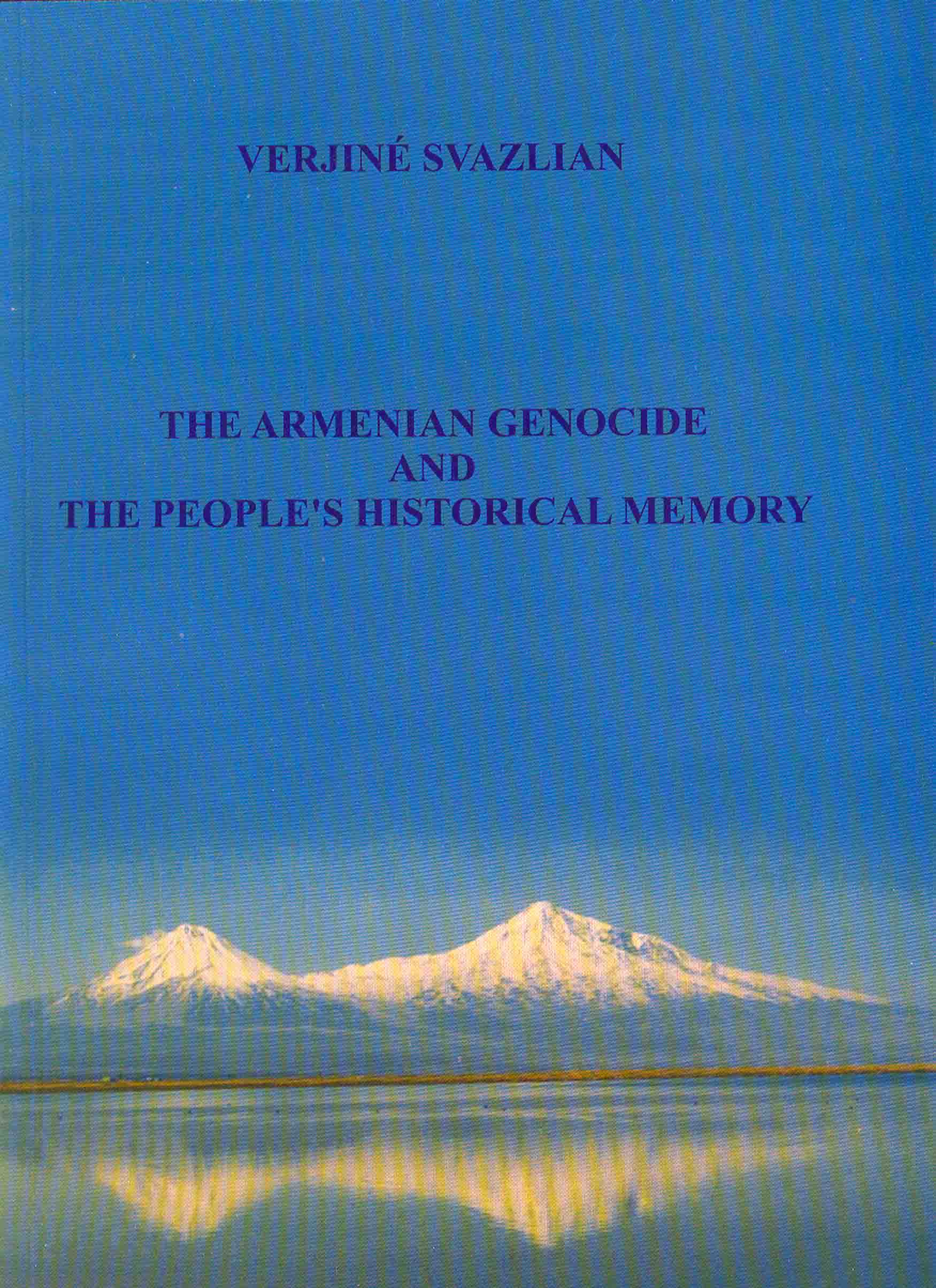 |
Svazlian Verjine, The Armenian Genocide and the People’s Historical Memory, Yerevan:
“Gitoutyoun” Publishing House of NAS RA, 2005, 140 p., ISBN 5-8080-0600-7.
|
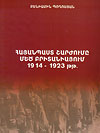 |
Beniamin Poghosyan, The Pro-Armenian Movement in Great Britain, 1914-1923, Nahapet Edition, Yerevan, 2005, 174 p., (in Arm.)
In this monograph the author introduces activities of the pro-Armenian organizations as well as certain individuals in 1914-1923 in Great Britain who provided relief aid to the Armenian refugees and supported righteous claims of the Armenian people before the British social and political circles.
|
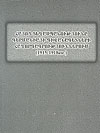 |
Armenian Genocide as reflected in the German Diplomatic Records, (1915-1918), according to materials of the Political Archive of the German Foreign Ministry, compiled and introduced by V. A. Mikayelyan, Museum-Institute of Armenian Genocide of National Academy of Science Edition, Yerevan, 2004, 219 p., (in Arm.)
The volume is a collection of the records of the Political Archive of the German Foreign Ministry, which testify to the Armenian Genocide of 1915-1918
|
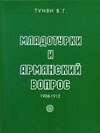 |
Valeriy Tunyan, The Young Turks and the Armenian Question, Part 1 (1908-1912), Museum-Institute of Armenian Genocide of National Academy of Science Edition, Yerevan, 2004, 392 p., (in Rus.)
The monograph’s first part focuses on the issue of the attitude of the Committee of Union and Progress-Turkish leading political party to the Armenian Question, its relationships with the Armenian political institutions, such as the National Assembly, Constantinople Patriarchate, political parties, as well as the Armenian-Turkish relations since the Young Turks’ ascendance to power till the downfall of their Cabinet.
|
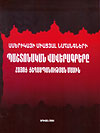 |
The United States Official Records on the Armenian Genocide, compiled by Ara Sarafian, Museum-Institute of Armenian Genocide of National Academy of Science Edition, Yerevan, 2004, 336 p., (in Arm.)
The present collection of documents brings to the attention of researchers and wider public a number of reports on the Armenian Genocide of 1915-1917 by US consuls resident in the Ottoman Empire of that period.
|
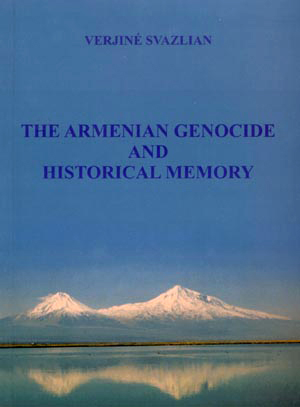 |
Verjine Svazlian, “The Armenian Genocide and Historical Memory”, Armenian Genocide Museum-Institute of National Academy of Science of RA, Yerevan, 2004, 160p., (in English).
This study presents an overall outline of the history and events of the Armenian Genocide (1915-1922), which have been detailed and substantiated with authentic testimonies communicated by eyewitness survivors and written down, audio and video- recorded by the author- over an almost 50-year span in Armenian and in the Diaspora.
|
 |
Austro-Hungarian Diplomats’ accounts on the Armenian Genocide (1915-1918), Collection of Archival Documents, compiled and introduced by Artem Ohandjanian, translated form German into Armenian by Varlam Martirosyan, Nahapet Edition, Yerevan, 2004, 130 p., (in Arm.)
This collection of documents comprises accounts of the Austro-Hungarian diplomatic representatives in the Ottoman Empire on the Armenian Genocide of 1915-1918.
|
 |
Armen Marukyan, The Armenian Question and the Russian Policies, (1915-1917), Museum-Institute of Armenian Genocide of National Academy of Science Edition, Yerevan, 2003, 485 p., (in Rus.)
The monograph discusses the policies of the Tsarist, Provisional Government and Soviet regimes in Russia in the years of the Armenian Genocide (1915-1917). It also examines the dynamic of a aforementioned three regimes in regard to the Armenian Question; as well as Russian policies in respect to the Armenian population of Western Armenia.
|
 |
Robert Baghdasaryan, The Genocide and the Armenian Intelligentsia of Russia, Gitutyun Edition, Yerevan, 2003, 256 p., (in Rus.)
The monograph presents the socio-political, cultural-patriotic and publicist activities of the renowned Armenian intellectuals of Russia, such as G. Janshiev, A. Jiviliegov, G. Chalkhushyan, M. Papajanov, Y. Zavriyev, K. Mikayelyan in the period of the Armenian Genocide (beginning from the 1890's till 1920's). The book covers issues related to the Armenian-Russian historical-Cultural connections at the Turn of the 19-20 Century.
|
 |
Lavrentiy Barseghyan, France is the First State in the World Recognize the Armenian Genocide by Law, Yerevan: Museum-Institute of Armenian Genocide of National Academy of Science Edition, 2003, 244 p., (in Arm.)
The volume for the first time brings forward to the reader’s attention minutes of the debates on the Armenian Genocide in the National Assembly and the Senate of the French Republic.
|
 |
The Diary of Abbot Chaperon, Cilicia 1920 – Constantinople 1921-1923, Translated from French into Armenian and introduction by S.Sahakyan and S.Muradyan, Museum-Institute of Armenian Genocide of National Academy of Science Edition, Yerevan, 2002, 202 p., (in Arm.)
The French Military priest, Jules Chaperon, who arrived in Cilicia in 1920 became witness to the French-Turkish conflict and noted down his impressions in his diary. From 1920 to 1923 when he was in Constantinople he established several orphanages and helped to transfer the Armenians, who survived from the atrocities to Europe at his own expense. This translation was made from the French edition (1996) of the Diary.
|
 |
Arsen Avagyan, Genocide of 1915: Mechanisms of Decision-making and their Implementation, Yerevan: Museum-Institute of Armenian Genocide of National Academy of Science Gitutyun Publ., 1999, 110 p., (in Russian.)
The volume concentrates on the decision-making process of the Young Turk movement towards deportation and extermination of the Armenians as well as the implementation of those decisions through the Special Organization. The study is based on extensive archival documentation, such as the 1915 decision of the Ottoman parliament on the Deportation of Armenians, the 1918 debates of the same parliament on lawlessness of the same decision and directives of the Young Turk leaders on deportations and extermination of the Armenians etc.
|
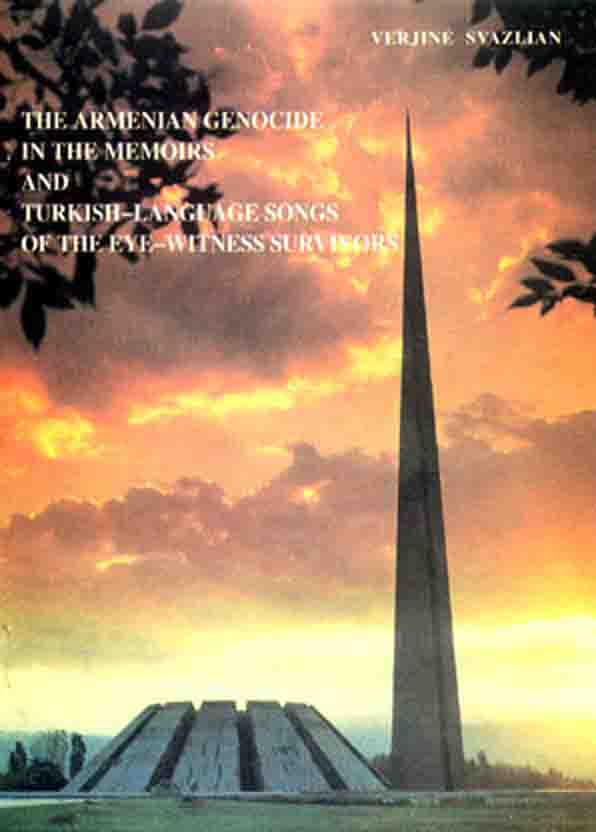 |
Svazlian Verjine, The Armenian Genocide in the Memoirs and Turkish Language Songs of the Eyewitness Survivors.
Yerevan: “Gitoutyoun” Publishing House of NAS RA, 1999, 44 p., ISBN 5-8080-0336-9.
|
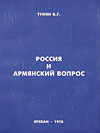 |
Valeriy Tunyan, Russia and the Armenian Question, Museum-Institute of Armenian Genocide of National Academy of Science Edition, Yerevan, 1998, (in Rus.)
The present monograph focuses on the Russian-Armenian relationships beginning from incorporation of Eastern Armenia into Russia till the beginning of the 20th century. The Armenian Question is viewed in close connections with the expectations of the Armenian national activists, international treaties signed by Russia, as well as the attitude of the Great Powers. The Armenian policy of the Russian autocracy is viewed in the general context of the geopolitical controversy in the Middle East, the Russo-Turkish and Russo-Iranian relations are paid a special attention, and the Russo-British controversy in Asia Minor are exposed. The Russian-Armenian relations are viewed as friendly, which contributed to the continuous development of the Armenian people.
|
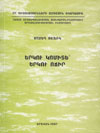 |
Ahmed Refik, Two Committees, Two Crimes, translated into Armenian from Turkish and introduced by Samvel Muradyan, Museum-Institute of Armenian Genocide of National Academy of Science Edition, Yerevan, 1998, 98 p., (in Arm.)
The Turkish historian Ahmed Refik Altinay (1880-1937) witnessed the deportation of the Armenians from Eskishehir in 1915 and he visited Erzerum and Gyumri in 1918. His personal experiences and reflections on those events are put into a series of articles entitled “Two Committees, Two Crimes” published in Istanbul in 1919, and afterwards republished twice in a separate volume.
The present volume is the translation of the latest Turkish edition (1994).
|
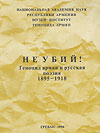 |
Thou Shall not Kill! The Armenian Genocide and the Russian Poetry 1895-1918, Museum-Institute of Armenian Genocide of National Academy of Science Edition, Yerevan, 1996, 123 p., (in Rus.)
The present volume contains the attachment of late 19th early 20th century Russian poetry dedicated to the Armenians and the Armenian Genocide
|
|
DONATE |
TO KEEP THE MEMORY OF THE ARMENIAN GENOCIDE ALIVE
Special Projects Implemented by the Armenian Genocide Museum-Institute Foundation
|
COPYRIGHT |

|
AGMI BOOKSTORE |
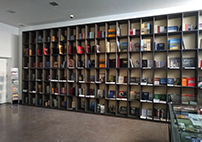
The Armenian Genocide Museum-Institute’s “World of Books”
|
TESTIMONIAL OF ARMENIAN GENOCIDE SURVIVORS |
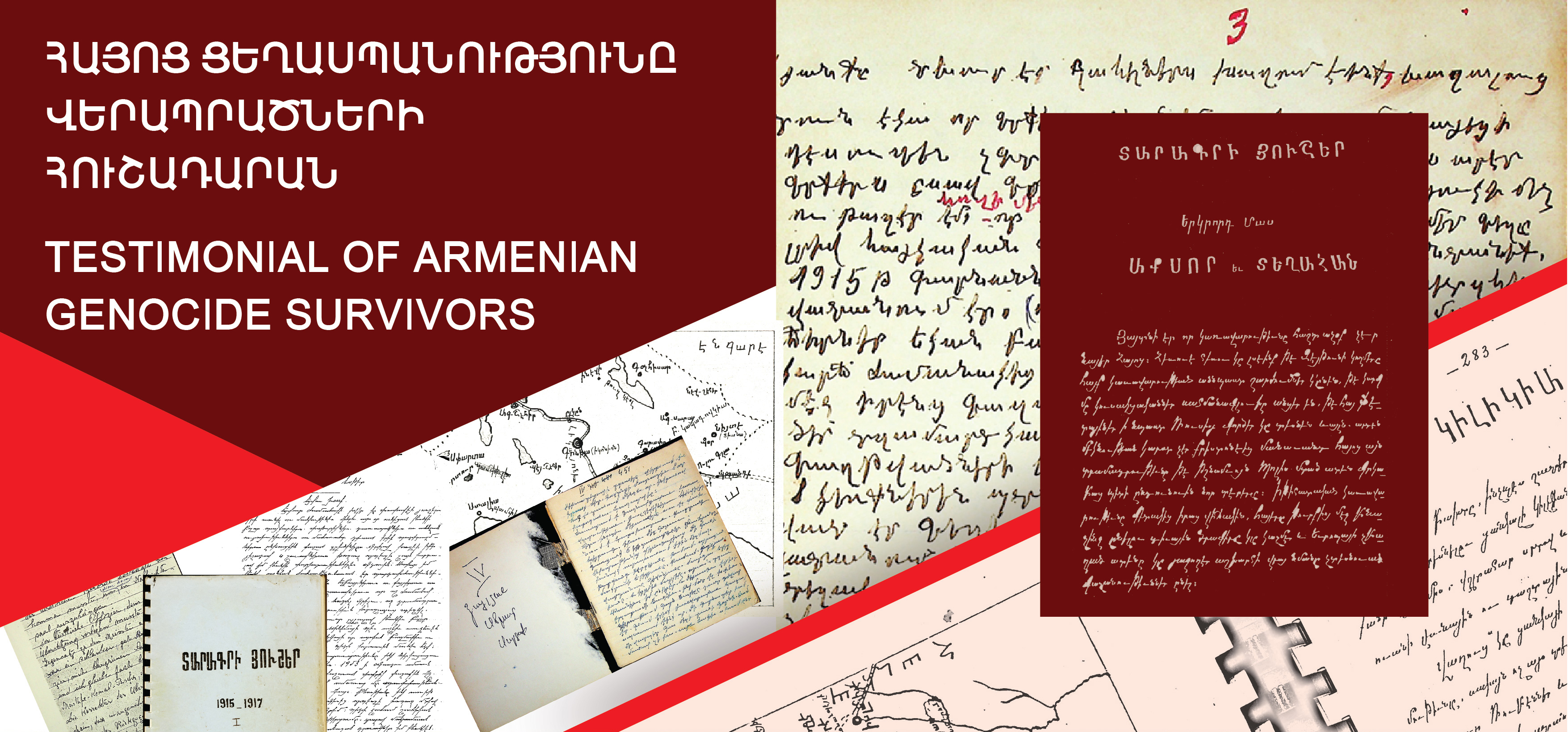
THE AGMI COLLECTION OF UNPUBLISHED MEMOIRS
|
ONLINE EXHIBITION |
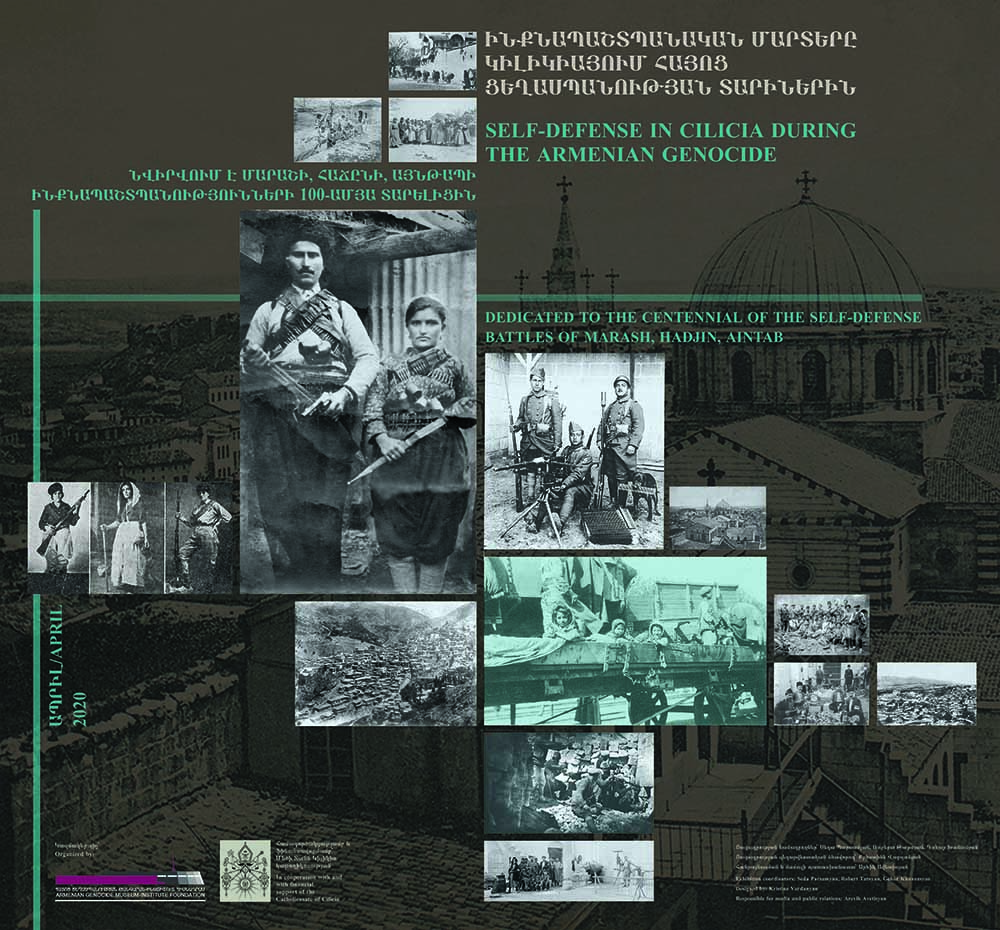
SELF-DEFENSE IN CILICIA DURING THE ARMENIAN GENOCIDE
DEDICATED TO THE CENTENNIAL OF THE SELF-DEFENSE BATTLES OF MARASH, HADJIN, AINTAB
|
LEMKIN SCHOLARSHIP |
AGMI ANNOUNCES 2024
LEMKIN SCHOLARSHIP FOR FOREIGN STUDENTS
|
TRANSFER YOUR MEMORY |
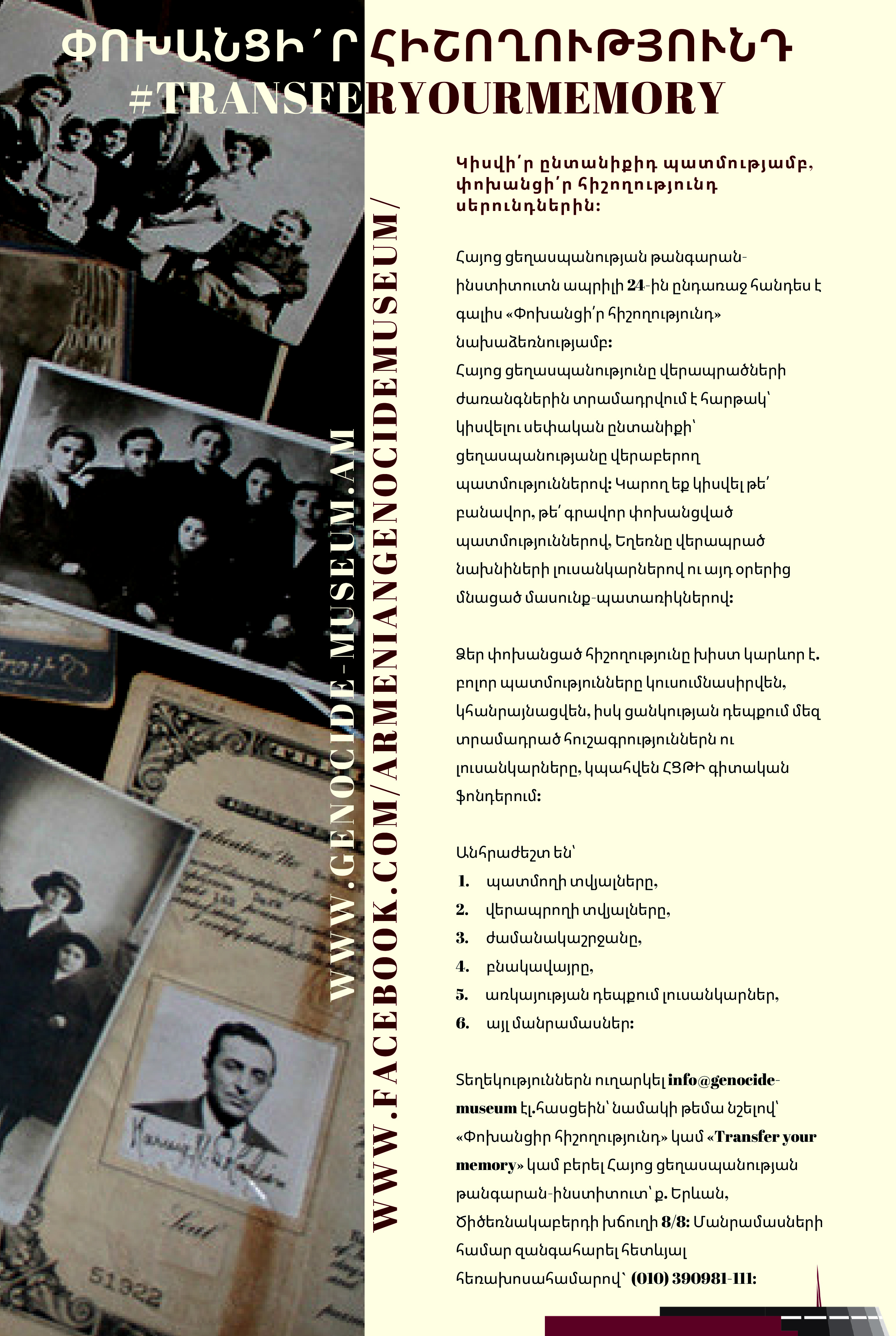
Share your family story,
Transfer your memory to generations.
On the eve of April 24, the Armenian Genocide Museum-Institute undertakes an initiative “transfer your memory”.
|
|